
Insights
Vehicle Inspection Station: Core Systems, Equipment Specs and Compliance Guide
Building a vehicle inspection station? Compare core safety systems, model-level equipment specs, and compliance steps to launch a certified test lane.
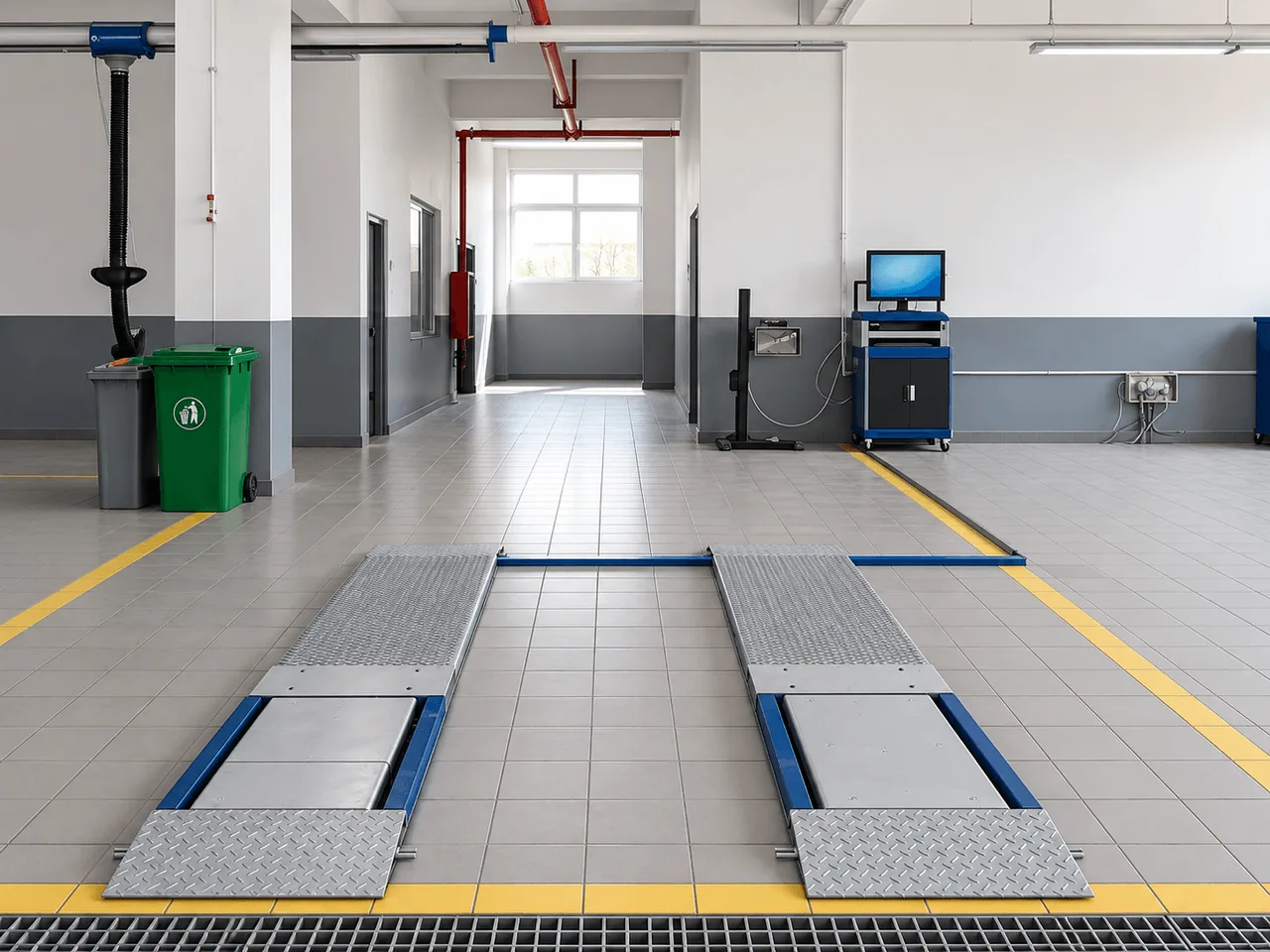
Vehicle Inspection Station: Core Systems, Equipment Specs and Compliance Guide
A vehicle inspection station is only as strong as the equipment behind it. Whether you are building a new lane or upgrading an existing test line, this guide covers the systems, specifications, and compliance steps that actually matter. You will see which testers cover brakes, steering, lighting, and emissions, how to match models to axle loads, and what regulators expect. All specifications come from Cartesy product manuals, drawn from inspection lines deployed across Asia and Africa.
In this guide:
- The safety systems every lane must check, with model-level specs
- How regulations and certification standards shape equipment choice
- The three-step inspection workflow and what each station needs
- Service types, from annual checks to salvage vehicle inspection
What Is a Vehicle Inspection Station and Why Is It Essential?
A vehicle inspection station is a facility that checks a vehicle against defined safety and emission standards. For a driver it is a legal checkpoint. For an operator it is a regulated business built on throughput, accuracy, and traceable records. Every result your lane prints must be defensible, which is why the instruments behind the test matter more than the building around it.
A well-equipped station does more than pass or fail a car. It gives the owner a clear picture of what needs repair, gives the regulator an auditable record, and gives you repeatable revenue. That is the real reason a vehicle inspection station is worth planning carefully instead of buying instruments one at a time.
Ensuring Road Safety and Legal Compliance
Road safety starts with measurable checks: can the vehicle stop straight, track true, and stay under control? A complete vehicle safety systems inspection answers those questions with numbers, not impressions. Brake imbalance between left and right wheels may look fine in a walk-around, yet pull a car into another lane under hard braking.
Compliance is the other half. Regulators in most markets require evidence that a vehicle met the standard on a given date, using calibrated equipment. When you design the lane around that requirement, each test result becomes part of a defensible record rather than a checkbox.
State Regulations and Certification Standards
Inspection rules differ by country and, in some markets, by state or province. Before you select equipment, confirm which standards your local authority accepts and whether type approval or metrology certification is required. In markets following Chinese-origin standards, for example, brake and emission testers are commonly built to GB 7258, GB 38900, GB 18285, and GB 3847, with gas analyzers meeting OIML R99 class 00.
Treat those standards as a specification filter, not a footnote. A tester that cannot output data in the format your authority accepts will need replacing, even if the hardware is sound. Ask suppliers for the exact certification scope and calibration interval before you commit.
Regulatory note: Licensing, accepted standards, and fees vary by jurisdiction. Confirm current vehicle inspection requirements with your local authority before investing in equipment.
Core Safety Systems Checked During a Vehicle Inspection
A single brake tester or gas analyzer does not make a station. The value comes from a bonded set of instruments that share data and enforce a fixed sequence. Below are the systems a modern lane is expected to cover, with representative models and the specifications to check when you compare quotes. Figures are manufacturer nameplate values under standard test conditions; verify them against the current manual and your final layout before purchase.
Brakes, Tires, and Wheel Alignment
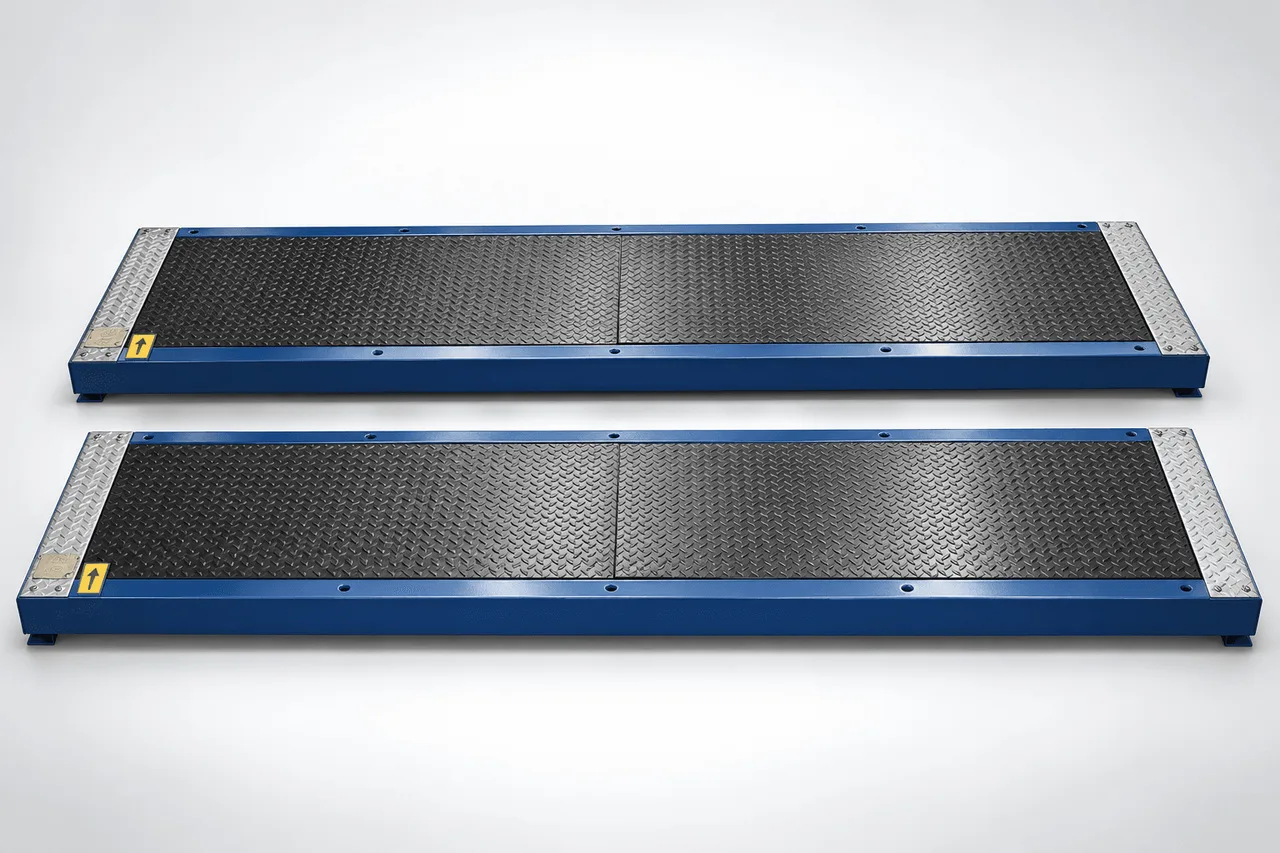
This is the safety-critical core. Roller brake testers and flat plate benches measure braking force and balance across axles; axle and kerb mass testers verify load distribution. A sound brake and lamp inspection process starts here, because stopping distance and directional stability depend on these numbers. The table shows the brake and axle load equipment most lanes are built around.
| Equipment | Representative model | Max axle load | Key measuring range | Indication error |
|---|---|---|---|---|
| Roller brake tester | CTFZ series | 3–15 t | Max brake force 35 kN (10 t model) | ≤ ±3% |
| Load-lift brake tester | CTFZ-15JZ | Wheel load up to 7.5 t | Max brake force 39 kN, lift stroke 100 mm | ≤ ±1% |
| Luxury flat brake tester | CTHPB series | 3–13 t | Brake force 10–45 kN, speed 5–10 km/h | ≤ ±3% |
| Ultra-thin flat brake tester | CTPB series | 3–10 t | Sideslip range 0–±15 m/km | ≤ ±3% |
| Axle (wheel) load tester | CTZZ-3 / 10 / 15 | 3 / 10 / 15 t | Wheel load 0–1500 / 5000 / 7500 kg | — |
| Multi-axle load tester | CTZZ-13-4 / -6 | 3×10 t | Platform 2×4000×1150 mm (4-type) | — |
| Kerb mass tester | CTZZ-15-4 | 3×10 t | Platform 2×4000×1150 mm | — |
Choose by vehicle mix, not by headline capacity. A 3T roller bench suits sedans and light vans; a 15T with hydraulic load lift handles trucks and coaches and reveals brake fade that a standard bench misses. Flat plate testers can be surface-mounted without a 380 V supply, which suits constrained sites, while roller types need a pit but simulate sustained braking.
Steering, Suspension, and Body Structure
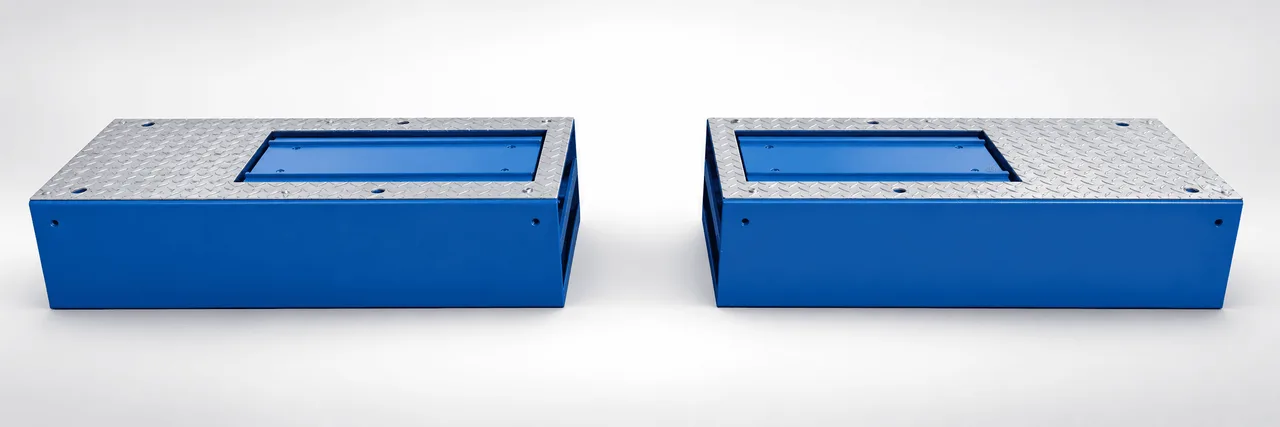
The second group of checks catches problems a brake test cannot see. A disciplined steering and suspension check reads wheel drift, damping response, and steering geometry, then adds chassis and undercarriage diagnostics for hidden structural damage. Pair these instruments with the brake bench and you cover the two most common causes of loss of control.
| Equipment | Representative model | Max axle load | Key range / frequency | Accuracy / indication error |
|---|---|---|---|---|
| Sideslip tester | CTCH-3 / 10 / 15 | 3 / 10 / 15 t | Range ±15 m/km | Synchronization error < 0.04 mm |
| Suspension tester | CTXX-3 / 10 | 3 / 10 t | Excitation frequency ≥ 23 Hz | Absorption repeat error ≤ 2% |
| Shock absorption and damping tester | CTZN-3 | Test axle load 2.5 t | Test frequency 2–11.5 Hz | Indication accuracy 2% |
| Automatic steering angle tester | CTZJ-13-2 | 13 t | Steering angle 0–50°, resolution 0.1° | Measuring accuracy 2% FS |
The suspension tester reports an EUSAMA absorption ratio, where a higher value means better damping; the damping tester uses an algorithm to calculate the shock absorber coefficient directly. Both help you explain a result to a customer in plain terms instead of handing over a number they cannot interpret.
For body structure and undercarriage, the next tier of equipment exposes wear and hidden damage that a visual walk-around never reaches.
| Equipment | Representative model | Allowable axle load | Key range | Accuracy / feature |
|---|---|---|---|---|
| Chassis play detector | CTJX-3 / 13 | 3 / 13 t | Platform travel ±50 mm, speed 60–80 mm/s | Max force 20 kN, wireless remote |
| Automatic undercarriage and tread scanner | CTLTT-3 | 0–4 t | Tread depth 0–25 mm, track width 700–2200 mm | Accuracy 0.01 mm, vision + laser non-contact |
| Chassis dynamometer | CTDCG-3 / 10 / 13 / 15 | 3 / 10 / 13 / 15 t | Max absorption 160–350 kW, top speed 130–160 km/h | Roller adhesion coefficient ≥ 0.92 |
The play detector moves its plates under load so an inspector can check tie rods and ball joints by remote control. The undercarriage scanner completes a vision-and-laser scan at low speed without lifting the vehicle, which is exactly why it earns its keep in salvage vehicle inspection — hidden structural damage often sits below the body. A chassis dynamometer then measures power delivery under load and exposes driveline faults a static brake test cannot find.
Lights, Signals, and Passenger Compartment
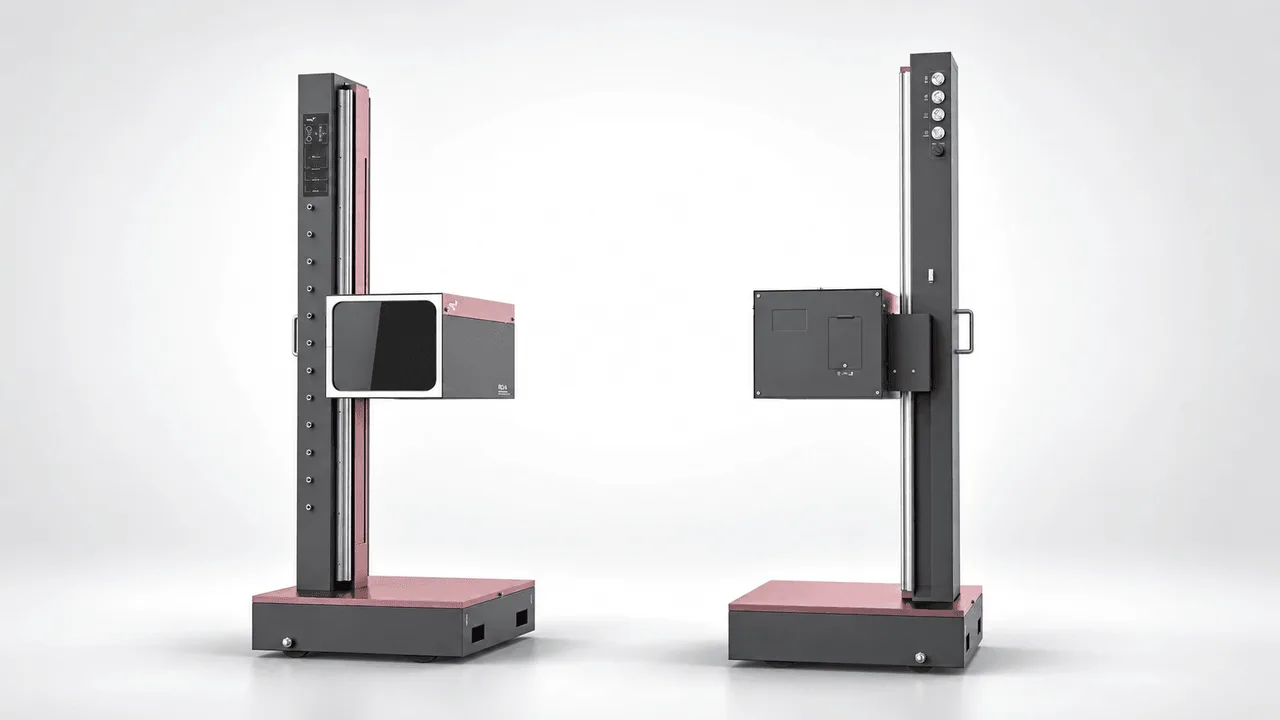
Lighting and visible equipment complete the safety side of the test. A headlight aimer checks beam intensity and axis deviation across halogen, xenon, and LED systems, while sound level meters and a few ancillary instruments close out the record. This is the second half of a brake and lamp inspection: stopping power and visibility are checked together because a vehicle needs both to be roadworthy at night. The MQD-6A headlight tester and related models are listed in the emission and optical table below.
Emissions Testing and Road Test Evaluation
Emissions are the second pillar of most inspection businesses. A complete emissions testing setup covers petrol and diesel vehicles separately, because the measured species and the governing standard differ. Petrol lines analyze CO, HC, and CO₂ with non-dispersive infrared and calculate the excess air ratio λ; diesel lines focus on opacity and NO. The table collects the representative analyzers used in modern lanes.
| Equipment | Representative model | Key range | Indication error / accuracy | Standard |
|---|---|---|---|---|
| Petrol exhaust analyzer | MQW-50A / 5105 | HC 0–9999 ppm, CO 0–15.00% | ±3% (low range) | GB 18285, OIML R99 class 00 |
| Diesel exhaust analyzer | MQW-5102 / 5102(Z) | CO₂ 0–18%, NO 0–5000 ppm | NO ±25 ppm or ±4% | GB 3847 |
| Opacity smoke meter | MQY-201 / 202 / 210 | Opacity 0–99.9%, absorption 0–16.08 m⁻¹ | ±2.0% | GB 3847 |
| Five-parameter mobile source tester | MQY-5C | Temp −20 to 60 °C, RH 0–95%, pressure 40–110 kPa, rpm 500–6000 | Temp ±0.5 °C, rpm ±1% | GB 18285 / 3847 |
| Headlight tester | MQD-6A / 5A / 3C | Luminous intensity 0–120000 cd, axis deviation ±56 cm/dam | Intensity ±10%, deviation ±3.2 cm/dam | GB 7258, GB 38900 |
| Exhaust flow analyzer | ML-100 | Flow 4–12 m³/min, O₂ 0–25%, temp −30 to 150 °C | Flow ±4% F·S, temp ±1 °C | Replaces imported flowmeters |
Smoke meters use an air curtain to protect the optics and hold the chamber at constant temperature to prevent condensation. The headlight tester uses dual-CCD technology and completes a beam check in roughly 25–40 seconds. Plan extraction ventilation for the emission bay, since high-idle testing generates heat and exhaust that must be removed from the work area. All analyzers should feed the central console so results land in the same record as the safety tests.
Types of Vehicle Inspection Services Offered
Your equipment determines which services you can sell. Design the lane around the services your market pays for, then match instruments to that list rather than the other way around.
Annual State Safety and Emissions Inspections
This is the volume business. Annual safety and emission checks bring repeat traffic and predictable cash flow. A 3T line handles the bulk of private vehicles; adding a 15T lane opens trucks, coaches, and trailers. Throughput here depends on cycle time and data handling, so invest in a control system that moves each vehicle through the sequence without re-entering results by hand.
Pre-Purchase and Commercial Vehicle Inspections
Used-vehicle and fleet checks are higher margin and less price-sensitive. Buyers of commercial vehicles want evidence of chassis integrity and brake condition, which is where the play detector, undercarriage scanner, and dynamometer justify their cost. The same configuration supports salvage vehicle inspection, where an underbody scan can reveal repaired structural damage before a vehicle is insured or resold.
Preventative Maintenance and Repair Services
Inspection data is a natural lead into maintenance. When your lane records a damping fault or uneven brake wear, the customer already has a reason to book a repair. Workshops that connect inspection results to a service offering keep the revenue on site instead of sending the driver elsewhere.
How the Vehicle Inspection Process Works
A good station is a controlled flow, not a collection of test benches. Design the process so each vehicle moves one way through fixed stations and every result is captured automatically.
Step 1: Pre-Inspection Preparation and Basic Checks
The operator confirms vehicle identity, checks fluid levels and tires, and records the odometer. The bay itself needs clear space — a typical roller lane allows about 4.5 m × 4.0 m of clearance, a floor slope within 2 mm/m, a 380 V / 400 V three-phase supply, and 6–8 bar compressed air. Getting these basics right at the design stage avoids expensive rework later.
Step 2: Professional Diagnostic and Safety Assessment
The vehicle then passes through brake and axle load, sideslip and suspension, chassis, and emission stations. Each instrument writes its result to the central console with a timestamp and operator ID. Automated sequencing prevents a skipped test, and safety interlocks stop the line if a vehicle leaves a station before the measurement is valid.
Step 3: Passing Certification, Repairs, and Registration
The system compiles a pass or fail report from the stored results. If a vehicle fails, the report identifies the specific fault and the owner can repair and retest. Keep the original record and the retest record linked — regulators increasingly ask for the full audit trail, not just the final certificate.
Evaluating Certifications, Licensing, and Technician Expertise
Equipment only pays off if the station is licensed and the technicians are trained. Budget for both before you sign a supply contract.
Checking Customer Reviews, Turnaround Time, and Pricing
Look past the equipment list and ask how a supplier supports a live station: calibration service, spare parts lead time, and response to a fault that stops the lane. For your own pricing, model the cost per vehicle across energy, consumables, and downtime, not just the purchase price of the testers. A cheaper bench that needs frequent recalibration can cost more over three years.
Booking Your Inspection Appointment Online
Modern stations take bookings online and feed appointments into the lane schedule. Choose a control platform that can export results in your authority's required format and accept software updates as rules change. Confirm that the supplier offers technician training on operation, daily checks, and common fault diagnosis, and ask what is covered by warranty.
Frequently Asked Questions
Q: Can the same lane test both cars and trucks? A: A 3T lane is built for light vehicles and a 15T lane for heavy ones; the axle load rating and platform size are not interchangeable. Many stations run a light lane plus a reinforced lane to cover both.
Q: Do flat plate brake testers need a pit? A: No. Flat plate units can be surface-mounted and do not need a 380 V supply, which suits sites where excavation is limited. Roller testers need a pit but simulate sustained braking.
Q: Which analyzer do I need for diesel vehicles? A: Use a diesel exhaust analyzer and an opacity smoke meter built to GB 3847, with NO measurement where your standard requires it. Petrol standards such as GB 18285 use a different measurement method.
Q: How long does a full inspection take? A: A single car typically clears the safety and emission sequence in a few minutes once the lane is running. Actual throughput depends on staffing, queue management, and how results are recorded.
Q: Can I add lanes later? A: Yes, if the control software and site utilities are specified with expansion in mind. Confirm sensor interfaces and spare capacity in the console before the first build.
Q: What maintenance do the testers need? A: Regular calibration and cleaning of rollers, plates, and optical cells. Ask for the calibration interval and the list of wear parts for each model before purchase.
Q: Is undercarriage scanning worth the investment? A: It earns back its cost in used-vehicle and commercial inspection, where hidden structural damage is the main risk. For a pure annual-check station it is optional.
Q: Do I need type approval for the equipment? A: It depends on your jurisdiction. Some authorities require type approval or metrology certification; confirm the exact scope with your local regulator before ordering.
Next Steps
The right vehicle inspection station is built around your vehicle mix, your local standards, and the services you want to sell. Start by listing the tests your authority requires, then match each one to a tester whose range and certification fit. If you want a second set of eyes on the layout, the suspension, chassis and steering equipment range is a useful starting point for the safety side of the line.
Request a tailored equipment list and quote — tell us your vehicle mix, lane size, and target standard, and our engineers will respond within one working day.
All specifications are representative manufacturer values under standard test conditions. Confirm them against the current product manual and your final drawings before purchase. Safety, emission, and licensing requirements differ by market; verify them with your local authority.