
Suspension, Chassis & Steering Testing Equipment
Play Detector | CTJX-3/CTJX-13
Undetected clearance across tie rods, ball joints, and steering linkages introduces road safety hazards, uneven tire wear, and vehicle instability. A play detector functions as a dedicated Vehicle Performance Tester des...

Undetected clearance across tie rods, ball joints, and steering linkages introduces road safety hazards, uneven tire wear, and vehicle instability. A play detector functions as a dedicated Vehicle Performance Tester designed to identify joint play and fitting clearance in automotive suspension and steering assemblies. Integrating this specialized Inspection Equipment into vehicle test lanes and maintenance workshops allows technicians to isolate chassis wear under loaded conditions without dismantling assemblies.
Sourcing testing machinery from an experienced Automotive Inspection Line Manufacturer requires matching axle capacity, actuation force, and platform dimensions to real fleet profiles. This technical product overview details the mechanical architecture, operational parameters, and selection criteria for the Cartesykj CTJX series hydraulic clearance testers.
Table of Contents
- Verified Equipment Definition and Material/Application Scope
- Buyer Value and Sourcing Considerations Supported by Supplied Facts
- Verified Technology Trends and Classifications
- Documented Materials, Quality Controls, Certifications, and Components
- Practical Sourcing and Risk-Mitigation Guidance
- Frequently Asked Questions
- Conclusion: Selecting the Right Play Detector
Verified Equipment Definition and Material/Application Scope
A chassis clearance tester, commonly referred to as a play detector, is electro-hydraulic workshop equipment engineered to verify the mechanical condition of chassis joints. The testing mechanism consists of two floor-level platforms installed flush with the workshop floor or over an inspection pit. Technicians drive the vehicle forward until either the front or rear steered axle rests directly upon the two movable plates.
During a steering system inspection, the operator utilizes a wireless control unit to actuate the test plates independently or synchronously. These plates generate controlled longitudinal and lateral displacements beneath the tires. Because the vehicle weight remains exerted on the contact patches, moving the plates stresses steering arms, tie rods, steering knuckles, and suspension bushings, reproducing real road forces.
Under these loaded movements, an inspector situated in the pit or beside the lift inspects the undercarriage with an integrated inspection torch. A play detector makes it straightforward to verify fitting clearance across primary assemblies:
- Horizontal tie rods: Pinpointing axial end play, stripped adjustment threads, or loose locknuts.
- Ball heads and ball joints: Revealing internal spherical socket clearance and torn dust boots under lateral stress.
- Steering arms and idler assemblies: Exposing worn bushings or pivot play that causes wandering steering.
- Wheel bearings: Identifying runout, axial movement, or hub looseness under transverse loading.
- Suspension linkages: Exposing torn rubber-metal bushings on control arms, trailing arms, and stabilizer links.
The operational application scope spans commercial periodic technical inspection facilities, fleet depot workshops, and high-volume automotive service franchises requiring rigorous chassis validation.
Buyer Value and Sourcing Considerations Supported by Supplied Facts
Procuring capital testing machinery requires aligning rated capacity with the vehicle classes passing through the inspection bay. A modern play detector must handle specific axle configurations while delivering sufficient displacement thrust. The Cartesykj range features two distinct configurations: the CTJX-3 for passenger cars and light commercial vehicles, and the CTJX-13 for heavy commercial transport, multi-axle trucks, and buses.
Technical Parameter
CTJX-3 Specification
CTJX-13 Specification
Maximum Axle Load
3,000 kg
13,000 kg
Plate Dimensions
760 mm × 500 mm
1,000 mm × 750 mm
Drive Mechanism
Hydraulic drive
Hydraulic drive
Power Supply
AC 380 V
AC 380 V
Plate Stroke / Movement
±50 mm
±50 mm
Drive Motor Power
3.0 kW
3.0 kW
Max. Displacement Force
20 kN
20 kN
Plate Travel Speed
60 to 80 mm/s
60 to 80 mm/s
Left Plate Direction
Front, back, left, right
Front, back, left, right
Right Plate Direction
Front, rear
Front, rear
Control System
Wireless remote control
Wireless remote control
Selecting the CTJX-3 play detector delivers an axle rating of 3,000 kg with plate dimensions of 760 mm by 500 mm. This compact footprint integrates into light-duty test lanes without extensive foundation work. Conversely, heavy-duty commercial facilities require the CTJX-13 play detector, rated for 13,000 kg axle loads with expansive 1,000 mm by 750 mm plates capable of accommodating wide commercial dual tires.
Both platforms share a standard 3.0 kW electric motor running on AC 380 V workshop supply. The system develops 20 kN of displacement force per plate, translating into reliable joint deflection even when loaded with heavy transport axles. Plate speed remains governed between 60 and 80 mm/s over a stroke length of ±50 mm, providing smooth movement that reveals loose joints without jarring delicate suspension components.
Verified Technology Trends and Classifications
Chassis clearance testing technology has evolved from manual pry bar testing methods to automated, remote-operated diagnostic platforms. Modern technical lanes classify clearance testing equipment based on power transmission, kinematic freedom, and operator interface.
Kinematic Directionality and Motion Control
Kinematic versatility determines the types of wear an inspection platform can reveal. In the CTJX play detector design, the left platform delivers four-way directional movement (longitudinal forward/backward and transverse lateral left/right). The right platform delivers two-way longitudinal displacement (forward and backward). Combining longitudinal thrust with transverse force reproduces multi-axial road stresses, isolating play in kingpins and steering arms that single-axis plates often miss.
Hydraulic Actuation vs. Alternate Drive Systems
While basic workshop tools occasionally rely on pneumatic cylinders, commercial inspection stations standardize on hydraulic actuation. Hydraulic fluid delivers high volumetric rigidity, preventing plate springback when an axle exerts heavy downforce. The hydraulic unit on the CTJX series play detector maintains a constant 20 kN displacement force across its 60–80 mm/s velocity range, preventing erratic stick-slip motion during diagnostic cycles.
Integrated Remote Inspection Ergonomics
Technician ergonomics directly impact test throughput and inspection quality. A modern play detector integrates wireless radio remotes fitted with high-output inspection torches. The inspector remains safely in the pit or service bay, shining light directly onto steering linkages while manipulating plate movement with handheld buttons. This single-operator workflow eliminates the miscommunication inherent in two-person inspection teams where one technician drives while another inspects.
Documented Materials, Quality Controls, Certifications, and Components
Structural reliability under repetitive axle loading requires robust materials and protected hydraulic circuits. The CTJX chassis play detector is partitioned into three foundational subsystems:
- Dual Moving Test Plates: Fabricated with an extra heavy-duty steel structure, the surface plates utilize anti-slip patterns to prevent tire scrubbing and slippage during maximum force application. The internal guidance mechanisms feature wear-resistant slide tracks engineered for lower operational noise in enclosed inspection pits.
- Hydraulic Power Unit: The hydraulic assembly houses a 3.0 kW motor, dedicated hydraulic fluid reservoir, precision directional solenoid valves, and safety relief valves calibrated to sustain continuous cycling up to 20 kN peak lateral thrust.
- Electrical and Control Subsystem: Operating on standard AC 380 V three-phase power, the electrical cabinet interfaces the hydraulic solenoids with an industrial wireless remote transceiver, shielded against radio frequency interference common in industrial workshop environments.
Operational durability relies heavily on routine maintenance cycles. Inspection facilities using a play detector should maintain hydraulic fluid levels, monitor system pressure, and inspect hydraulic hose lines for chafing or pressure drops to maintain constant 20 kN displacement ratings.
Practical Sourcing and Risk-Mitigation Guidance
Procuring vehicle chassis test equipment for commercial or regulatory inspection environments requires methodical planning around civil works, electrical infrastructure, and expected vehicle throughput.
Civil Works and Foundation Planning
Installing plate assemblies requires a reinforced concrete pit or dedicated recess. Civil engineers must pour level, reinforced pits capable of bearing dynamic loads beyond the 13,000 kg static rating for heavy vehicle lanes. Foundation recesses for a play detector must include drainage paths and protected conduit raceways for hydraulic hoses and electrical wiring leading to the external power unit.
Total Cost of Ownership Considerations
Beyond capital expenditure, buyers must evaluate operational expenditures over a 7- to 10-year service life. Wear components—including hydraulic fluid, valve seals, flexible high-pressure lines, and slide bearings—require periodic inspection. Sourcing a play detector with accessible 380 V industrial electric motors and standardized hydraulic valving mitigates downtime risks by ensuring parts can be serviced locally.
Procurement teams should verify that prospective suppliers provide comprehensive installation drawings, hydraulic schematics, and foundation layout templates prior to ocean transit. Ensuring the equipment arrives with appropriate wireless transceiver frequencies configured for regional telecommunication compliance prevents unexpected site delays.
Frequently Asked Questions
What vehicle components can be inspected using a play detector?
A chassis play detector evaluates fitting clearance across steering tie rods, ball joints, steering knuckles, idler arms, wheel hub bearings, and suspension control arm bushings. Moving the plates while the vehicle rests on them reproduces road forces, exposing play to the inspector.
What is the primary operational difference between the CTJX-3 and CTJX-13 models?
The CTJX-3 play detector supports a maximum axle load of 3,000 kg with 760 mm by 500 mm plates, making it suitable for passenger vehicles and light utility vans. The CTJX-13 supports a maximum axle load of 13,000 kg with 1,000 mm by 750 mm plates, designed for commercial trucks, trailers, and public transit buses.
Why is hydraulic drive preferred over manual or pneumatic systems?
Hydraulic drive provides steady, non-compressible displacement force up to 20 kN, allowing the plates to move smoothly under heavy multi-ton axle loads. Pneumatic systems often compress unpredictably under high downforce, while manual pry bars lack the force needed to uncover subtle joint wear under load.
How does the wireless remote improve vehicle testing efficiency?
The wireless remote control allows a single inspector to operate the test plates from within the pit or beside the lift. Integrated with an inspection torch, it lets the technician illuminate and observe joints in real time without needing an assistant in the vehicle cab to cycle steering inputs.
Conclusion: Selecting the Right Play Detector
Maintaining steering reliability and road safety relies on accurate diagnostic tools capable of revealing chassis wear under authentic mechanical loads. Integrating an industrial play detector into safety lanes delivers fast, verifiable, and repeatable chassis diagnostics. Sourcing a heavy-duty play detector ensures compliance with operational standards while streamlining workshop workflow. Contact our engineering team for technical drawings, foundation specifications, and integration advice tailored to your vehicle testing lane requirements.
Related Products
Compare related inspection systems
Suspension, Chassis & Steering Testing Equipment
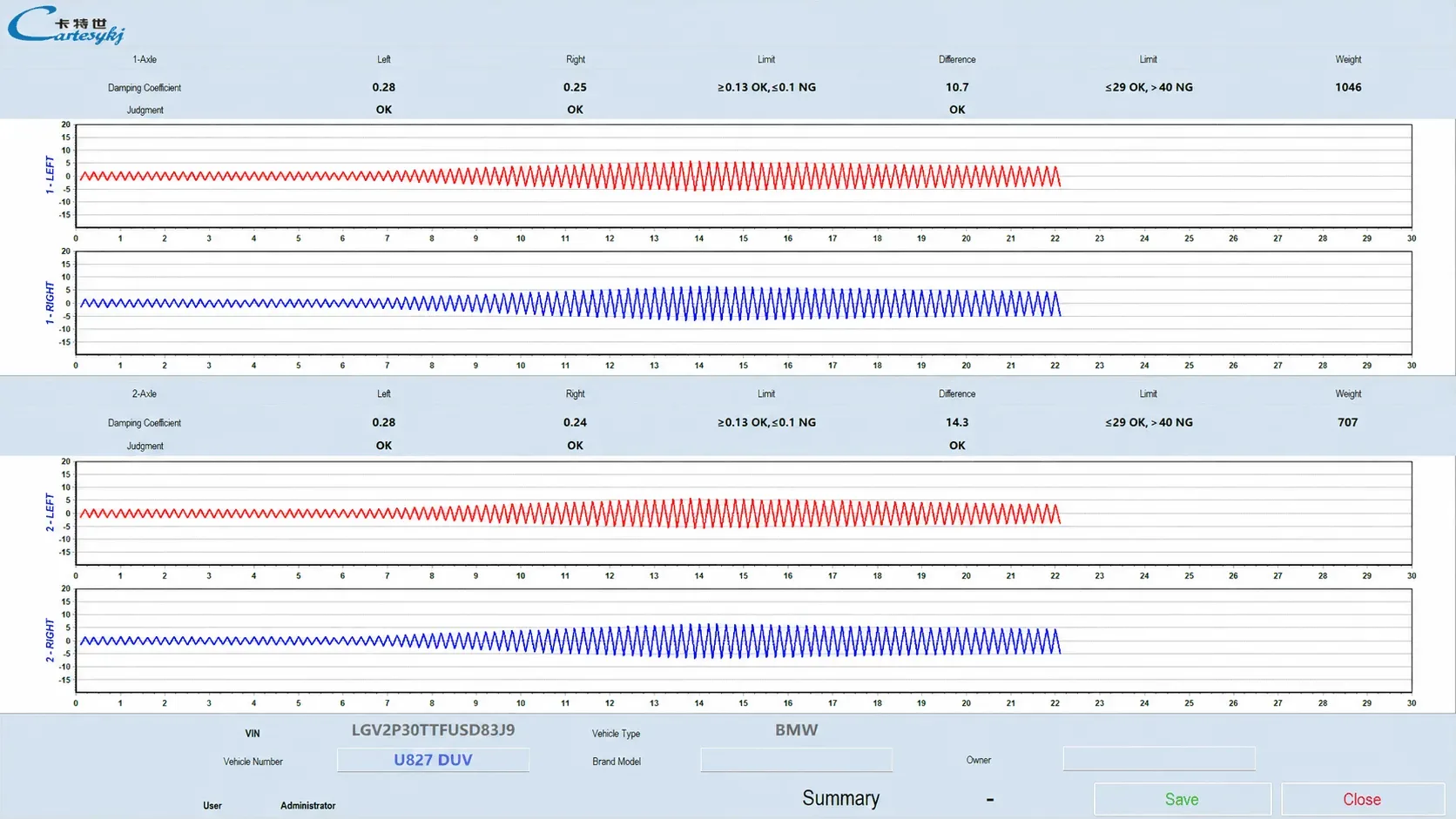
Automotive shock absorption and damping tester | CTZN-3
View Product
Suspension, Chassis & Steering Testing Equipment
Vehicle Suspension Performance Tester | CTXX-3/CTXX-10
View ProductRequest a Quote
Request configuration and pricing for your project.
Share your vehicle type, inspection lane layout, target capacity, and required model configuration for Play Detector | CTJX-3/CTJX-13.
Share the project location, vehicle types, inspection scope, applicable standards, target throughput, site conditions and current stage. We will confirm the configuration scope before discussing pricing.