
Brake & Axle Load Testing Equipment
Plate Brake Tester | 2CTPB-3-4/2CTPB-3-4
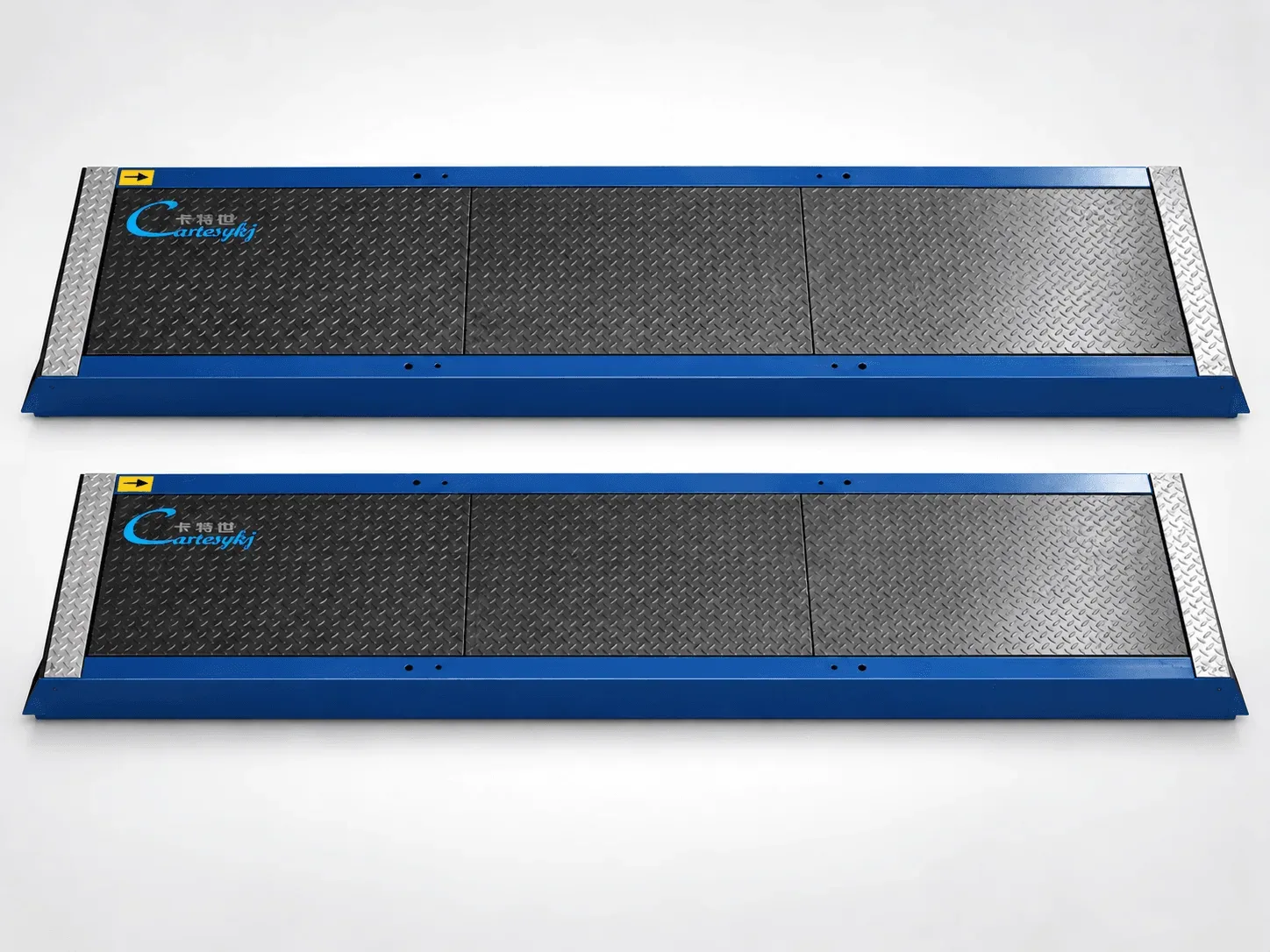
/4CTPB-3-4/2CTPB-10/2CTPBH-10/2CTPBH-3-4 Brake system diagnosis determines whether a commercial testing bay maintains rapid inspection throughput or faces operational bottlenecks. Integrating an ultra-thin plate brake t...


/4CTPB-3-4/2CTPB-10/2CTPBH-10/2CTPBH-3-4
Brake system diagnosis determines whether a commercial testing bay maintains rapid inspection throughput or faces operational bottlenecks. Integrating an ultra-thin plate brake tester allows inspection centers to dynamically verify stopping force, axle load, and lateral wheel deviation in a single drive-over motion. Engineered to reproduce the friction characteristics of level road surfaces, modern flat test benches improve diagnostic accuracy for statutory transit testing centers, commercial fleet repair facilities, and technical automotive academies.
Contents
- Equipment Definition and Application Scope
- Buyer Value, Operational Economics, and Sourcing Considerations
- Technology Classifications and Operating Principles of the Plate Brake Tester
- Materials, Manufacturing Standards, and Sensor Tolerances
- Procurement Checklists and Practical Risk Mitigation
- Frequently Asked Questions
1. Verified Equipment Definition and Material/Application Scope
A plate brake tester operates as a surface-mounted or shallow-mount dynamic inspection platform designed to evaluate vehicle stopping performance under true-to-life rolling resistance. Unlike roller brake testers that spin driven wheels via electric motors while the chassis remains stationary, a dynamic flat bench requires the motor vehicle to drive across the plates at a controlled speed between 5 km/h and 15 km/h. When the vehicle operator applies the brakes directly over the test surface, multi-axis transducer arrays capture transient mechanical forces instantaneously.
In a single dynamic cycle, the platform completes the measurement of front or rear axle braking force, axle load, individual wheel weight, suspension balance, and lateral sideslip. Because the interaction mirrors natural highway deceleration, this dynamic brake performance tester avoids tire surface overheating or artificial drivetrain binding during testing. The platform's modular structure allows technicians to adapt plate arrangements to test passenger cars, multi-axle freight transports, motorbikes, and agricultural machinery.
Vehicle inspection stations employ the platform across three primary operational sectors:
- Automobile Testing Stations: Official safety certification lanes requiring high-throughput, repeatable diagnostic routines per lane to clear mandatory regulatory quotas.
- Commercial Repair Shops and Dealership Garages: Service centers diagnosing braking imbalance, uneven pad wear, suspension compliance, or residual drag across customer vehicles.
- Automotive Teaching and Technical Research Units: Academic laboratories and R&D engineering centers studying transient braking force curves, weight shift dynamics, and whole-vehicle coordination timing.
When installed within a comprehensive inspection corridor, the unit functions alongside headlight aligners and exhaust probes. Sourcing engineers seeking versatile car inspection equipment rely on this flat platform design to streamline diagnostic steps into a continuous flow.
2. Buyer Value and Sourcing Considerations Supported by Supplied Facts
Procuring industrial diagnostic lanes requires balancing capital expenditure against ongoing operational costs. A notable advantage of the Cartesykj plate brake tester is its structural installation profile. The platform requires no dedicated deep concrete foundation pit. Facilities can install the testing plates directly on level workshop floors, substantially lowering civil engineering costs, floor excavation delays, and structural building disruption.
Energy consumption profiles represent another core economic metric. Traditional roller diagnostic benches often require dedicated 380V three-phase high-draw electrical circuits to drive high-torque electric motors. In contrast, the Cartesykj flat bench utilizes passive vehicle momentum and low-draw internal electronics, requiring only a single-phase 220V power supply consuming 300W. This ultra-low energy requirement eliminates expensive transformer expansions and high-voltage circuit drops.
Lane throughput efficiency provides further operational value. Combining axle weighing, dynamic sideslip measurement, and brake force capture on a single footprint eliminates intermediate positioning steps. Technicians avoid staging vehicles through isolated scales, independent sideslip plates, and driven roller dynos. Single-pass data capture reduces cycle times per vehicle, prevents lane congestion, and lowers labor overhead across routine testing operations.
3. Verified Technology Trends and Classifications: Plate Brake Tester Architecture
Modern plate test benches are categorized by their mechanical footprint, axle capacities, and instrumentation layouts. Sourcing teams select configurations based on target vehicle wheelbase profiles, bay floor lengths, and diagnostic throughput requirements. Platforms are configured in either two-plate modules or extended four-plate combinations.
Two-Plate Architectural Configurations
Two-plate models evaluate one axle at a time. The test vehicle enters the diagnostic area at 5 to 10 km/h, applies the service brakes over the plates to record front-axle metrics, and then moves forward so the trailing axle can execute the sequence. This layout requires minimal bay length and provides an economical layout for light-duty inspection bays, quick-service garages, and technical workshops handling variable wheelbases.
Four-Plate Simultaneous Evaluation Systems
A four-plate configuration positions two plate sets in series along the test corridor. This arrangement allows the front and rear wheels of passenger vehicles to contact the diagnostic plates simultaneously. When the driver brakes, the system records stopping forces across all four wheels concurrently, delivering complete diagnostic insight:
- True real-time braking synchronization between front and rear axles.
- Accurate acquisition of the whole-vehicle braking force characteristic curve.
- Precise measurement of braking coordination time under transient dynamic load transfer.
The table below summarizes factory specifications across Cartesykj flat testing platforms, detailing loading thresholds, plate sizing, and sensor spans:
Model Identifier
Max Axle Load (kg)
Braking Test Range (kN)
Sideslip Test Scope (m/km)
Plate Dimensions (L × W × H, mm)
Weighing Plate Size (W × L, mm)
Combination Layout
Power Supply
2CTPB-3-4
3,000
10
0 to ±15
2554 × 610 × 50
610 × 1500
2 Plates
220V, 300W
2CTPB-3-3
3,000
10
N/A
1760 × 610 × 50
610 × 1500
2 Plates
220V, 300W
4CTPB-3-4
3,000
10
0 to ±15
4314 × 610 × 50
610 × 1500
4 Plates
220V, 300W
2CTPB-10
10,000
35
0 to ±15
2854 × 1000 × 58
1000 × 1800
2 Plates (4 Plates Optional)
220V, 300W
2CTPBH-10
10,000
35
N/A
2440 × 1112 × 100
1000 × 1800
2 Plates (4 Plates Optional)
220V, 300W
2CTPBH-3-4
3,000
10
0 to ±15
2790 × 746 × 80
650 × 1500
2 Plates
220V, 300W
Light-duty models such as the 2CTPB-3-4 and 4CTPB-3-4 accommodate axle loads up to 3,000 kg and braking thresholds up to 10 kN. For heavy transport, municipal buses, and commercial haulers, the 2CTPB-10 and 2CTPBH-10 support axle loads up to 10,000 kg with an expanded 35 kN brake force range. All listed platforms operate within a standardized test speed envelope of 5 to 10 km/h, delivering consistent dynamic evaluations regardless of chassis mass.
4. Documented Materials, Quality Controls, Certifications, and Components
The Cartesykj flat brake bench series incorporates European engineering technology designed for long-term dimensional stability and structural rigidity. Featuring ultra-thin plate profiles between 50 mm and 100 mm, the low profile facilitates smooth vehicle entry and exit without unseating suspension components before brake application. This design preserves test baseline stability and provides realistic road simulation feedback across every run.
Instrumentation centers on imported high-precision sensors engineered for rapid signal response and minimal thermal drift. These transducers record dynamic forces within narrow error bands:
- Braking Force Indication Error: ≤ ±3% throughout the measurement range (10 kN to 35 kN).
- Axle Load Indication Error: ≤ ±2% full-scale across 3,000 kg and 10,000 kg capacities.
- Sideslip Testing Scope and Precision: 0 to ±15 m/km detection range with measurement precision of ≤ 0.2 m/km on supported models.
The manufacturing methods, structural designs, and sensor calibration procedures comply with Chinese national standards GB21861 and GB7258. These certifications confirm that every plate brake tester meets established safety inspection and roadworthiness standards. Standard digital interfaces also support integration with external headlight testers and exhaust gas analyzers to build fully automated, multi-functional test corridors.
5. Practical Sourcing and Risk-Mitigation Guidance
Procuring a durable brake performance tester involves matching equipment capabilities against vehicle types, civil space constraints, and data recording needs. Sourcing teams can mitigate operational risks by assessing several practical factors:
- Axle Loading and Brake Capacity: Light commercial vehicles and passenger cars are accommodated by 3,000 kg axle load platforms with 10 kN force cells. High-capacity commercial transit and freight hubs require 10,000 kg platforms with 35 kN load cells to prevent structural overload.
- Integrated Sideslip vs. Standalone Braking: For full wheel-alignment screening alongside brake testing, models such as the 2CTPB-3-4 or 2CTPB-10 incorporate sideslip monitoring from 0 to ±15 m/km. If lateral deviation testing is handled elsewhere, simpler variants like the 2CTPB-3-3 provide focused braking diagnostics.
- Throughput Volume and Synchronization: While two-plate benches require shorter lane space, four-plate units enable simultaneous axle testing. High-volume testing stations benefit from four-plate lines to capture whole-vehicle coordination time and dynamic balance in a single movement.
- Electrical and Foundation Preparation: Surface mounting eliminates deep foundation pits, but the installation floor must still be level and structurally sound. Because the console operates on 220V 300W electrical feeds, facilities avoid dedicated 380V power line drops.
Working alongside an established Vehicle Inspection Equipment Manufacturer ensures proper system setup, regular sensor calibration, and long-term diagnostic reliability. Installing factory-verified brake testing equipment minimizes downtime and ensures testing bays remain compliant with official inspection criteria.
Selecting the right plate brake tester configuration requires matching your workshop dimensions, expected daily vehicle volume, and maximum axle capacities against verified equipment specifications. Sourcing managers and technical bay designers are encouraged to consult engineering specialists to review installation plans, interface configurations, and factory-documented test lines.
Related Products
Compare related inspection systems
Brake & Axle Load Testing Equipment
Roller Brake Opposite Force Load Lift Station | CTFZ-15JZ
View ProductRequest a Quote
Request configuration and pricing for your project.
Share your vehicle type, inspection lane layout, target capacity, and required model configuration for Plate Brake Tester | 2CTPB-3-4/2CTPB-3-4.
Share the project location, vehicle types, inspection scope, applicable standards, target throughput, site conditions and current stage. We will confirm the configuration scope before discussing pricing.