
Lighting & Emissions Testing Equipment
Diesel Exhaust Gas Analyzer | MQY 900/902/903/201/210/204
Operating a vehicle testing station or engine overhaul facility requires strict adherence to regulatory standards. Industrial inspection lanes, environmental enforcement teams, and automotive assembly lines face operati...


Operating a vehicle testing station or engine overhaul facility requires strict adherence to regulatory standards. Industrial inspection lanes, environmental enforcement teams, and automotive assembly lines face operational disruptions when particulate monitoring fails. Selecting professional diesel emissions testing equipment ensures accurate opacity and emission evaluations, preventing compliance fines and re-inspection costs.
Modern compression-ignition engines emit fine particulate matter, unburned hydrocarbons, and nitrogen oxides. Quantifying these elements requires rugged emissions testing equipment engineered to perform under demanding workshop environments. Utilizing a dependable diesel exhaust gas analyzer and transmission-type opacity meter enables testing stations to execute both free acceleration and loaded deceleration procedures smoothly.
Table of Contents
- Equipment Definition and Material and Application Scope
- Buyer Value and Sourcing Considerations for Diesel Emissions Testing Equipment
- Technology Trends and Diesel Emissions Testing Equipment Classifications
- Documented Materials, Quality Controls, Certifications, and Components
- Practical Sourcing and Risk-Mitigation Guidance
- Frequently Asked Questions
- Engineering Consultation and Technical Support
Equipment Definition and Material and Application Scope
Industrial diesel emissions testing equipment consists of specialized analytical instruments engineered to quantify soot density, particulate opacity, and optical light attenuation in compression-ignition exhaust streams. These systems sample exhaust gases directly from vehicle tailpipes, evaluating light transmission through an optical chamber to verify compliance with national environmental standards like GB 3847.
The operational scope covers municipal environmental protection bureaus, periodic motor vehicle inspection stations, commercial automotive manufacturing plants, and heavy-duty repair shops. Whether evaluating commercial transport trucks, municipal bus fleets, or non-road industrial machinery, verified emissions testing equipment delivers repeatable measurements necessary for regulatory certification.
A partial-flow transmission smoke meter extracts a representative sample of exhaust gas using a stainless steel sampling probe. The exhaust gas flows continuously through an optical measuring bench where a collimated light emitter projects a beam across the smoke column to a photodiode receiver. Advanced platforms also interface with an optical exhaust gas analyzer to track multi-gas compounds alongside physical particulate opacity.
By capturing real-time attenuation coefficients, a certified Vehicle Emission Tester identifies incomplete combustion, injector wear, and particulate filter failures. This ensures that non-compliant diesel vehicles are flagged before causing environmental harm or failing statutory road-worthiness evaluations.
Buyer Value and Sourcing Considerations for Diesel Emissions Testing Equipment
Procuring commercial diesel emissions testing equipment requires a clear evaluation of operational durability, measurement stability, and long-term ownership costs. Inspection lanes run hundreds of vehicles daily, where even minor equipment drift or optical fouling can halt lane throughput and create costly re-testing delays.
A primary failure mode in exhaust measurement is optical contamination caused by soot accumulation on internal glass lenses. Sourcing modern diesel emissions testing equipment featuring active air curtain technology isolates the sensitive emitter and detector optics behind a continuous barrier of clean, filtered air. This reduces maintenance cleaning intervals and protects optical alignment.
Another major buyer consideration is moisture management. Hot diesel exhaust contains significant water vapor that condenses rapidly upon entering an unheated sampling cell. Liquid moisture scatters light beams, generating false smoke opacity readings. Implementing hardware with an integrated constant-temperature heated measuring chamber ensures that water remains entirely in the vapor phase throughout the test cycle.
From an operational integration perspective, testing facilities require automated communication ports. Deploying a diesel exhaust gas analyzer and smoke meter with standard RS-232 serial interfaces allows test benches to stream opacity percentages, absorption coefficients, engine revolutions per minute, and oil temperature data straight into lane automation systems.
Technology Trends and Diesel Emissions Testing Equipment Classifications
The testing sector relies on transmission-type optical absorption meters and multi-gas analyzers tailored for specific test cycles, including free acceleration routines and loaded chassis dynamometer tests.
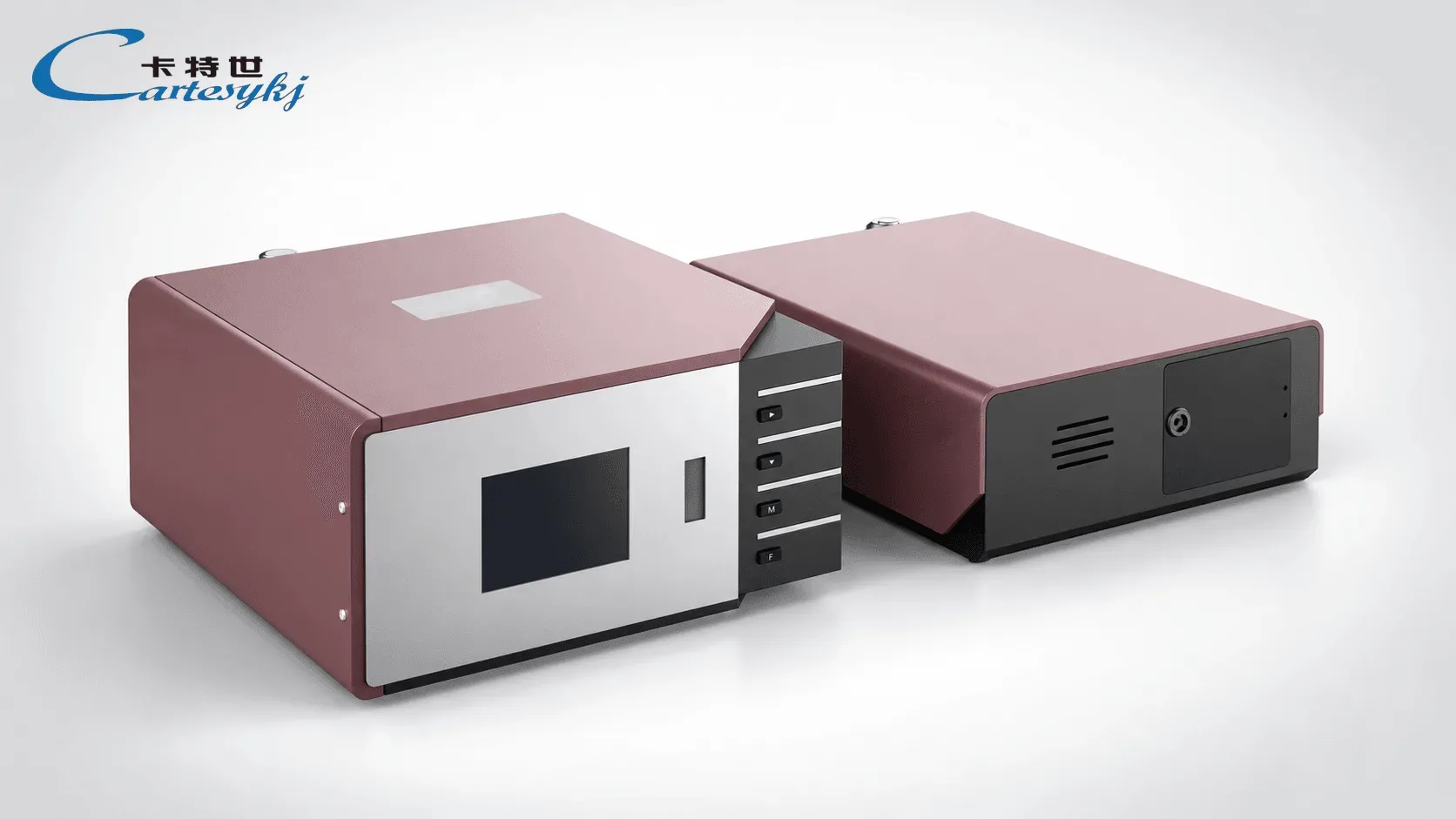
MQY-201 Transmission-Type Smoke Opacity Meter
The MQY-201 transmission-type smoke opacity meter represents a benchmark standard in split-sampling optical diagnostic hardware. Fully compliant with GB 3847 specifications for free acceleration and loaded deceleration methods, the MQY-201 delivers real-time monitoring of exhaust opacity, light absorption coefficients, engine oil temperature, and flue gas temperature.
The hardware features an active air curtain protection system that shields optical surfaces against soot contamination. An automated constant-temperature measuring chamber prevents water condensation. Visual data is delivered via a large graphical LCD screen, while an RS-232 communication port connects directly to host testing computers. Optional hardware includes an internal micro-printer and an auxiliary engine tachometer.
Measurement Parameter
Operational Range
Display Resolution
Absolute Indication Error
Opacity (N)
0 to 99.9%
0.1%
±2.0%
Light Absorption Coefficient (K)
0 to 16.08 m⁻¹
0.01 m⁻¹
±2.0% (Relative)
Engine Oil Temperature
0 to 200 °C
1 °C
±2 °C
Flue Gas Temperature
0 to 150 °C
1 °C
±2 °C
The optical chamber of the MQY-201 is engineered with an effective optical path length of 215 mm and an equivalent optical path length of 430 mm. The instrument operates on an AC 220V (±22V), 50 Hz (±1Hz) electrical supply with a nominal power consumption of 150 W. Operating environment limits include temperatures from 0 °C to 40 °C, barometric pressure from 70.0 kPa to 106.0 kPa, and relative humidity up to 95%.
Integration with Gas Analysis Platforms
While smoke opacity meters measure suspended particulate matter, comprehensive emissions auditing frequently couples smoke measurement with an optical exhaust gas analyzer. Combining a transmission opacity meter with a multi-gas diesel exhaust gas analyzer creates an all-in-one testing station that monitors CO2, nitrogen oxides, and soot density simultaneously, optimizing diagnostic accuracy across vehicle platforms.
Equipment Classification
Target Measurement Scope
Primary Application Setting
Transmission Opacity Meter
Opacity (N), Absorption Coeff. (K), Flue Gas Temp
Statutory diesel smoke compliance, periodic vehicle inspection lanes
Combined Emissions Testing Bench
Opacity (N), Flue Temp, Oil Temp, CO2, NOx
Loaded deceleration chassis dyno testing, engine R&D, fleet auditing
Documented Materials, Quality Controls, Certifications, and Components
Precision-built diesel emissions testing equipment requires robust mechanical construction and verified optical stability to survive repetitive testing cycles. The main optical body utilizes high-grade metal alloys with rigid mounting brackets to ensure that the light emitter and photodiode stay precisely aligned even when exposed to high-vibration shop environments.
Quality control standards focus on strict optical alignment and clean-air barrier consistency. The internal air curtain draws clean air through high-efficiency particulate filtration media, directing air across the lenses to form a laminar barrier against exhaust contamination. This optical architecture ensures consistent zero-point stability across continuous duty shifts.
The thermal management system features an integrated heating element wrapped around the perimeter of the measuring cell. Closed-loop electronic controllers regulate the chamber to a constant temperature, keeping incoming exhaust gas well above its condensation point. This eliminates water misting on optical windows, ensuring accurate data capture.
Electrical and metrological certifications comply with mandatory standards, specifically GB 3847 limits and test methods for compression-ignition engines. Digital control boards undergo rigorous burn-in cycles, verifying serial communication integrity and power supply tolerances between 198V and 242V AC.
Practical Sourcing and Risk-Mitigation Guidance
When selecting professional diesel emissions testing equipment, procurement managers should follow a standardized technical auditing protocol to prevent compatibility issues and field breakdowns:
- Verify Statutory Alignment: Confirm that the equipment meets GB 3847 technical standards, providing optical path dimensions of 215 mm effective and 430 mm equivalent length.
- Check Environmental Parameters: Ensure the testing bench operates within regional ambient limits, supporting atmospheric pressures down to 70.0 kPa and humidity levels up to 95%.
- Inspect Utility Requirements: Match the electrical infrastructure to AC 220V (±22V) at 50 Hz with a baseline power rating of 150 W per station.
- Review Accessory Expandability: Check for compatible peripheral interfaces, including RS-232 serial ports, engine speed tachometers, and oil temperature probes.
Testing facilities can avoid unexpected installation hurdles and calibration drift by selecting reliable diesel emissions testing equipment built with proven optical protection and active temperature regulation.
Frequently Asked Questions
What is the difference between opacity percentage (N) and light absorption coefficient (K)?
Opacity percentage (N) measures the percentage of light obstructed by exhaust smoke within the measuring path, scaled from 0% to 99.9%. The light absorption coefficient (K), measured in m⁻¹, represents an absolute optical attenuation value calculated via the Beer-Lambert law. Because K accounts for optical path length, it allows standardized cross-comparisons between different testing devices.
How does the air curtain system protect the optical sensors?
The air curtain directs a continuous flow of clean, filtered air across the protective windows of the emitter and receiver. This positive pressure barrier prevents hot exhaust gas and soot particulates from depositing onto the optical glass, preserving calibration accuracy and reducing manual cleaning frequency.
Why is a constant-temperature heated chamber necessary for diesel testing?
Diesel exhaust contains high concentrations of water vapor. If the sample chamber remains unheated, moisture condenses on the interior walls and optical surfaces. Condensed water droplets scatter the light beam, causing artificial spikes in measured opacity. Constant-temperature heating keeps exhaust moisture in a gaseous state.
Can the MQY-201 connect to central inspection station networks?
Yes. The MQY-201 comes standard with an RS-232 digital serial communication interface. This enables two-way data communication with host computers, central inspection databases, and automated testing control platforms.
Engineering Consultation and Technical Support
Choosing the right diesel emissions testing equipment depends on daily vehicle throughput, local regulatory standards, and inspection bay automation requirements. Whether you are upgrading an existing lane with a modern diesel exhaust gas analyzer or outfitting a complete testing facility, our engineering team provides factory-direct technical guidance. Contact us today to discuss hardware configurations, technical interface specifications, and certified testing solutions.
Related Products
Compare related inspection systems
Lighting & Emissions Testing Equipment
Automotive Exhaust Gas Analyzer | MQW-50A/50B/5105/5102/511/411/311
View Product
Request a Quote
Request configuration and pricing for your project.
Share your vehicle type, inspection lane layout, target capacity, and required model configuration for Diesel Exhaust Gas Analyzer | MQY 900/902/903/201/210/204.
Share the project location, vehicle types, inspection scope, applicable standards, target throughput, site conditions and current stage. We will confirm the configuration scope before discussing pricing.