
Insights
Electric Vehicle Battery Testing Equipment: The Core of Every EV Inspection Line
See what an EV inspection line checks and how to choose electric vehicle battery testing equipment that keeps every pass/fail result defensible and auditable.
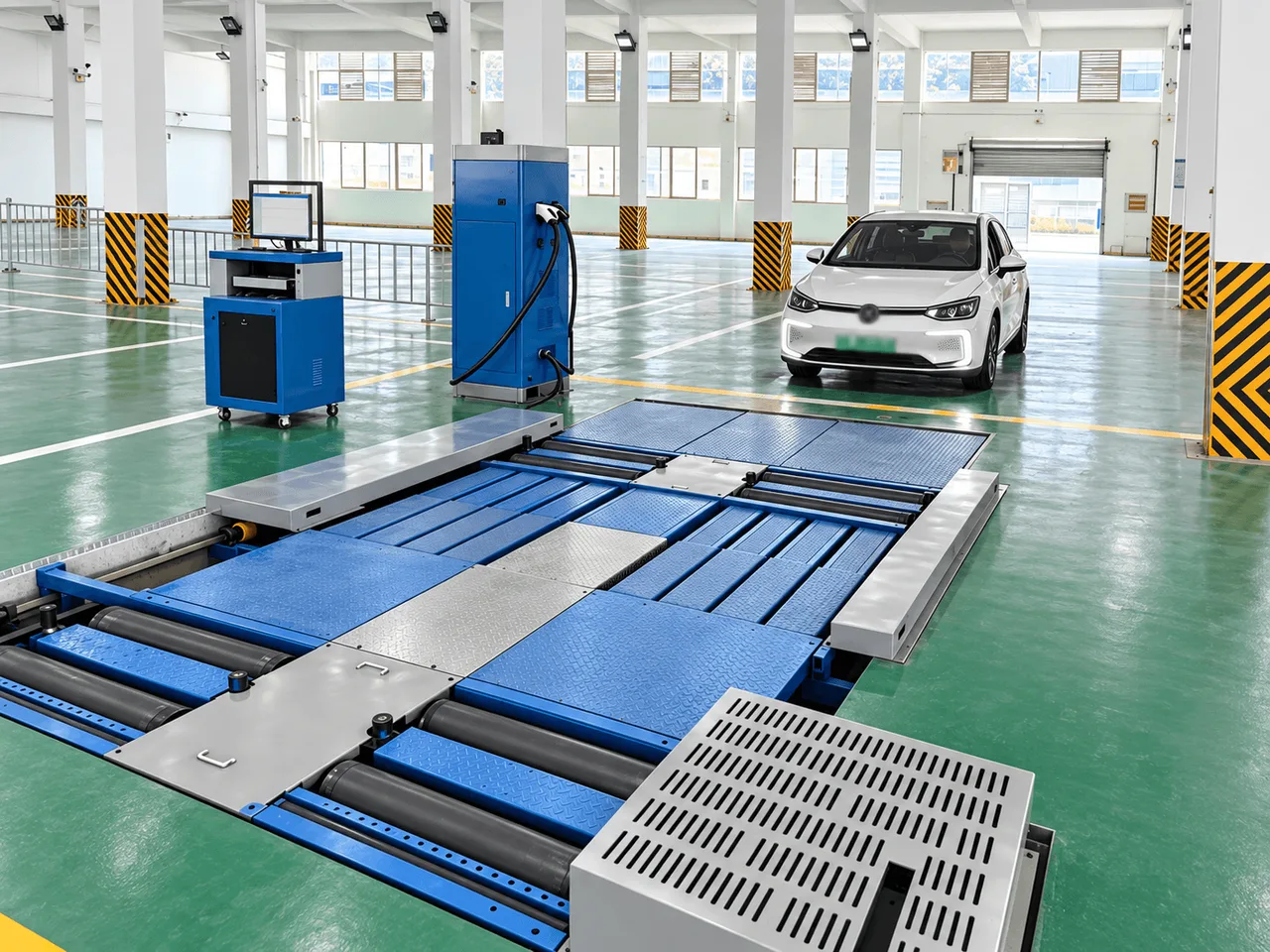
If you run a vehicle inspection line, an EV arriving for a check no longer means a quick tailpipe test. A modern electric vehicle carries a high-voltage pack, power electronics, and software that a gas probe cannot see. That is why electric vehicle battery testing equipment now sits at the center of a defensible inspection. In this guide you will learn what an EV inspection line checks, how it differs from emissions testing, which service packages to offer, and how to specify the systems that fit your operation.
本文要点 / Key Takeaways
- An EV inspection line verifies safety and roadworthiness — not exhaust.
- Battery health, thermal management, and software integrity are the three checks a tailpipe test cannot replace.
- The right configuration depends on who operates the line: regulators, dealerships, or independent shops.
- A repeatable workflow and a clear pass/fail report turn individual tests into auditable results.
- Choose equipment by vehicle mix and daily throughput, not by spec sheet alone.
Regulations vary by market. Treat this as general guidance and confirm current local requirements before you design a process or make a compliance claim.
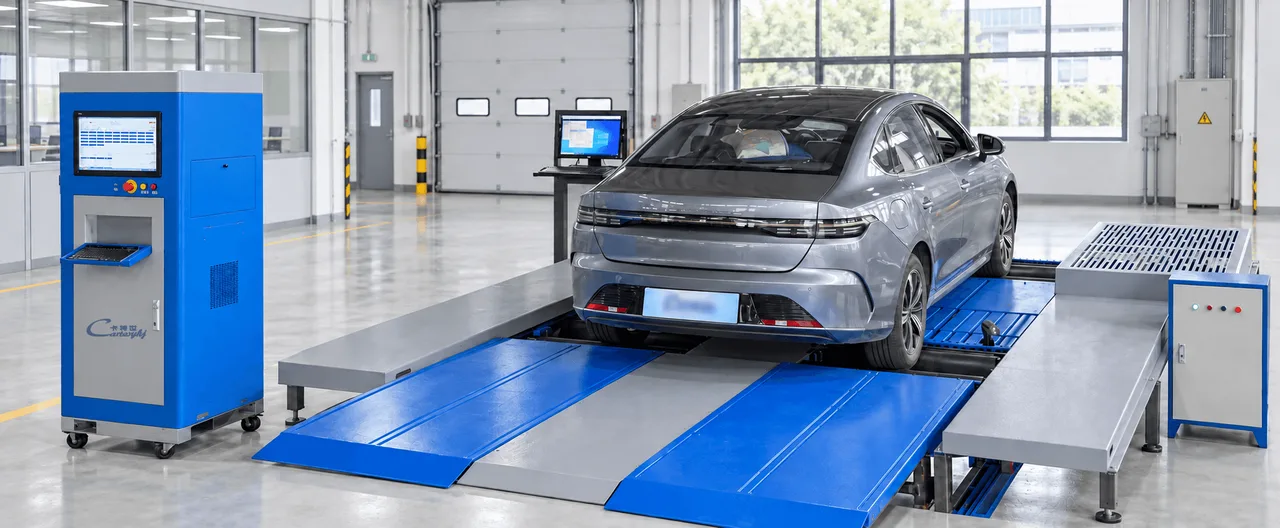 Caption: A battery pack discharge safety test on a four-wheel-drive chassis dynamometer, with charging and electrical safety equipment alongside.
What Is an EV Vehicle Inspection Line?
An EV vehicle inspection line is a dedicated set of stations that checks the safety and roadworthiness of electric and plug-in vehicles. It replaces the exhaust-focused workflow with electrical, thermal, and software checks — and it produces a record you can defend.
Purpose and Importance of Dedicated Electric Vehicle Testing
Electric vehicles fail in ways a conventional inspection cannot detect. A pack can lose capacity, develop cell imbalance, or overheat long before any warning light appears. Dedicated testing exists to make those risks visible.
A proper EV line helps you:
- Protect technicians by verifying isolation and high-voltage shutdown before any hands-on work.
- Detect hidden faults such as cell imbalance, rising internal resistance, or cooling-loop degradation.
- Create auditable records that support regulatory checks and resale decisions.
- Reduce liability by documenting the condition of the vehicle at the moment of inspection.
Without these checks, you are judging a vehicle by its exterior while its most expensive component goes unexamined.
How EV Inspection Lines Differ from Traditional Emissions Testing
An emissions line measures what leaves the tailpipe. An EV line measures what happens inside a high-voltage system. The two require different hardware, different safety procedures, and different data.
| Dimension | Traditional emissions line | EV inspection line |
|---|---|---|
| Primary target | Exhaust gases and engine management | Battery, drivetrain, HV safety, software |
| Core hardware | Gas analyzer,dynometer, OBD scanner | Battery tester, insulation tester, diagnostic scan tool |
| Main safety risk | Exhaust inhalation, moving parts | High voltage, thermal runaway |
| Data output | Pollutant readings, pass/fail | SoH, resistance, cell balance, DTCs, thermal status |
| Technician skill | Engine diagnostics | HV safety plus diagnostics |
The takeaway: an EV line is a safety and data environment, not a tailpipe lane. If you serve both vehicle types, plan for two distinct workflows under one roof.
Core Systems Checked on an EV Inspection Line
A complete EV check covers four systems, and the battery comes first because it drives both safety and residual value. The sections below show what to measure and why each measurement matters.
High-Voltage Battery State of Health (SoH) and Thermal Management
State of Health (SoH) is a percentage estimate of a battery's current capacity against its original capacity. It is the single number buyers, insurers, and regulators most often ask for — and the one an emissions test can never provide.
A capable ev battery pack test system measures more than voltage. Look for the following data points:
- Capacity and SoH — compares usable energy with the manufacturer's baseline.
- Internal resistance — rises with age and correlates with power loss and heat generation.
- Cell balance — flags groups that drift apart, a common early sign of pack stress.
- Insulation resistance — confirms the HV system is isolated from the chassis.
- Thermal management status — checks coolant flow, pump operation, and temperature spread across modules.
Example (illustrative, not a customer case): A five-year-old crossover arrives with no warning lights. A pack scan shows 91% SoH but a 28 mV cell-voltage spread under load. The result passes the basic threshold yet fails your internal balance criterion, prompting a cooling-loop inspection that finds a partially blocked channel. The value of the line is not the number — it is the decision the number triggers.
Pair the tester with a clear reporting format. A result without a threshold is just data; a result tied to a stated criterion becomes a defensible pass or fail. To see how a full system fits a physical lane, review our vehicle safety inspection line configuration.
Electric Drivetrain, Motor, and Power Electronics
The drivetrain converts stored energy into motion, and its failures are expensive because they are hard to see from outside. Check the motor, inverter, reduction gear, HV cabling, and cooling circuit as one connected system.
A practical inspection verifies:
- Insulation resistance and HV interlock continuity before energizing.
- Inverter and motor fault codes from the diagnostic scan.
- Coolant condition and flow at the motor and power electronics.
- Abnormal noise, vibration, or play at the reduction gear during a road test.
Treat any HV isolation fault as a stop condition. Continue the visual inspection only after the vehicle is safely de-energized.
EV Diagnostic Scan and Software Integrity
Software now governs how a vehicle behaves, so a scan is as important as a wrench check. A full EV diagnostic scan covers the battery management system, motor controller, inverter, and body modules — not just the engine ECU.
Your scan should capture:
- Stored and pending diagnostic trouble codes (DTCs) across HV-related modules.
- Software and calibration versions compared with the latest manufacturer release.
- Open recalls or service bulletins tied to the VIN.
- State-of-charge calibration and energy-consumption history.
Note that a clean scan does not prove a healthy pack. Many degradation patterns never set a code, which is why battery testing equipment and diagnostics belong together, not either/or.
Braking, Suspension, Steering, and Chassis Components
Regenerative braking means friction brakes wear slowly — which creates a different problem. Calipers can seize and discs can corrode from disuse, even on a low-mileage vehicle. The heavy battery pack also loads suspension and tires harder than a comparable combustion model.
Focus on:
- Brake disc condition, caliper movement, and contamination from corrosion.
- Suspension bushes, dampers, and ride height under the added pack weight.
- Steering play, alignment, and tire wear patterns.
- Chassis and underbody shielding for damage that could compromise the pack enclosure.
These checks keep the line relevant to everyday safety, not just high-voltage engineering.
Types of EV Inspection Services and Packages
Most successful operators offer three tiers: a compliance check, a pre-purchase inspection, and a hybrid-capable package. Clear tiers let customers choose by outcome rather than by price alone.
Mandatory Regulatory and Safety Compliance Inspections
These inspections exist to satisfy a legal or roadworthiness requirement in a given market. The scope is set by the regulator, so your job is to execute it consistently and record it cleanly.
Build the package around:
- A fixed checklist mapped to the local requirement.
- Verified technician credentials and calibrated test equipment.
- A time-stamped report with the pass/fail decision and the tester's identity.
Keep a version record of checklist changes. When a rule changes, you can show exactly which criteria applied on the date of each inspection.
Comprehensive Pre-Purchase EV Inspections (PPI)
A PPI answers one question for a buyer: what is this vehicle's real condition before I commit? Because the battery is often the most expensive component, a credible PPI always includes a battery health report alongside the usual mechanical checks.
A strong PPI package covers:
- SoH, cell balance, and thermal system condition.
- Diagnostic scan and recall status.
- Brakes, suspension, tires, and underbody.
- A documented road test and a written recommendation.
Hybrid and Plug-In Hybrid (PHEV) Testing Capabilities
Hybrids carry both an combustion engine and a high-voltage system, so they need both inspection workflows. A line that only handles full battery-electric vehicles will turn away a growing share of the market.
Your PHEV capability should cover:
- Emissions and engine checks using the traditional lane.
- HV isolation, battery health, and inverter diagnostics using the EV lane.
- The interaction between the two systems, including charging faults and power-split behavior.
Budget extra lane time for PHEVs. Two powertrains mean twice the diagnostic surface, and the schedule should reflect that.
Application Scenarios for EV Inspection Lines
The right configuration depends on who operates the line. Regulators, dealerships, and independent shops buy for different reasons, and each needs a different balance of throughput, depth, and reporting.
Government Testing Stations and Regulatory Compliance Centers
Public testing centers need consistency above all. They process high volumes, must apply identical criteria to every vehicle, and need reports that stand up to review.
Prioritize:
- Standardized checklists with locked thresholds.
- Equipment calibration records and audit trails.
- Staff training documentation and role-based access to results.
A Vehicle Safety Inspection Line in this setting should be designed for repeatability, not speed at the expense of evidence.
Automotive Dealerships and Used EV Certification Programs
Dealerships use inspections to price trade-ins, support certified pre-owned programs, and answer buyer questions with evidence. Here the report is a sales asset as much as a safety record.
Your line should produce a buyer-readable battery report, link results to the vehicle's listing, and keep the scan data available for warranty discussions. A clear SoH figure does more for trust than any adjective in the listing.
Independent Service Centers and Mobile EV Inspection Units
Independent shops win on flexibility. They serve owners who want a second opinion, a pre-purchase check, or a diagnostic before a repair decision — often without sending the vehicle to a large facility.
For these operators, portable Automotive Service Equipment matters: a compact battery analyzer, an insulation tester, and a scan tool that supports EV protocols can turn a service bay into a capable inspection point. Mobile units add a further requirement — results must sync to the office system so the report is ready before the technician leaves the site.
The EV Inspection Process and Requirements
A repeatable workflow is what turns a set of tests into an auditable result. The steps below apply whether you run a fixed lane or a mobile unit.
Required Documentation and Pre-Inspection Preparation
Preparation prevents most failed or inconclusive inspections. Collect the right documents and confirm the vehicle's state before anyone connects a tester.
Prepare these items:
- Vehicle identification and registration documents.
- Service history and any open recall or bulletin records.
- The manufacturer's battery specification and SoH baseline, where available.
- A safety checklist covering HV shutdown, interlock status, and work-area isolation.
Confirm the state of charge, tire pressures, and that the vehicle is not in a charging session. A car mid-charge gives unstable readings and adds risk.
Step-by-Step Testing Workflow and Road Test
Follow the same order every time. The sequence below protects the technician and avoids rework.
- Verify identity and documents against the appointment record.
- Perform the HV safety check — isolation resistance, interlock, and de-energizing procedure.
- Connect the battery tester and record SoH, resistance, cell balance, and temperatures.
- Run the diagnostic scan across battery, motor, inverter, and body modules.
- Inspect mechanical systems — brakes, suspension, steering, tires, and underbody.
- Complete the road test, noting drivetrain behavior, braking feel, and any warning messages.
- Issue the report with thresholds, results, pass/fail decision, and tester identity.
If any step fails, stop and record the reason before continuing. A clear failure trail is more useful than a rushed overall result.
Inspection Reporting, Pass/Fail Criteria, and Waivers
A good report separates facts from judgment. List measured values first, then the criterion applied, then the decision.
Include:
- Vehicle and tester identifiers, date, and time.
- Each measured value with its unit and the threshold used.
- Pass, fail, or inconclusive status per item.
- Recommended follow-up for any failure.
Waiver rules vary by market and by program. Where a waiver exists, document the authority, the specific item waived, and the expiry date. Never let a verbal agreement substitute for a written record.
How to Choose and Schedule an EV Inspection
Choose the package by the decision it supports, not by the cheapest line item. A buyer, a regulator, and a fleet manager need different evidence.
Comparing Inspection Packages, Pricing, and Coverage
Use this table to match a package to a customer need. Actual fees depend on local labor rates, lane time, and equipment depth — confirm them with the provider.
| Package | Typical scope | Best for | Main cost drivers |
|---|---|---|---|
| Compliance check | Regulator-required items | Fleet and roadworthiness renewals | Lane time, documentation |
| Pre-purchase inspection | Battery health, scan, mechanical, road test | Private buyers and dealers | Battery testing depth, report detail |
| Hybrid / PHEV package | Engine and HV checks | Mixed vehicle fleets | Dual workflows, longer slot |
| Mobile inspection | On-site battery and scan checks | Independent shops and remote buyers | Travel, portable equipment |
Three factors move price most: how deeply the battery is tested, how much lane time the vehicle needs, and how detailed the report must be. Ask for the exact scope in writing before booking.
Finding Certified EV Inspection Locations and Booking
Start with credential and scope rather than proximity. A nearby shop without HV-certified staff cannot produce a report you can rely on.
Check the following before you book:
- Technician credentials for high-voltage work.
- Whether the facility tests EV batteries, not just engines.
- Calibration records for the test equipment.
- Report format and turnaround time.
- Whether the result is accepted by your regulator or program.
If you are building a lane instead of booking one, shortlist an Automotive Inspection Line Manufacturer that can document calibration, integrate reporting, and support the equipment after installation. Ask how the line handles both BEV and PHEV workflows before you sign a specification.
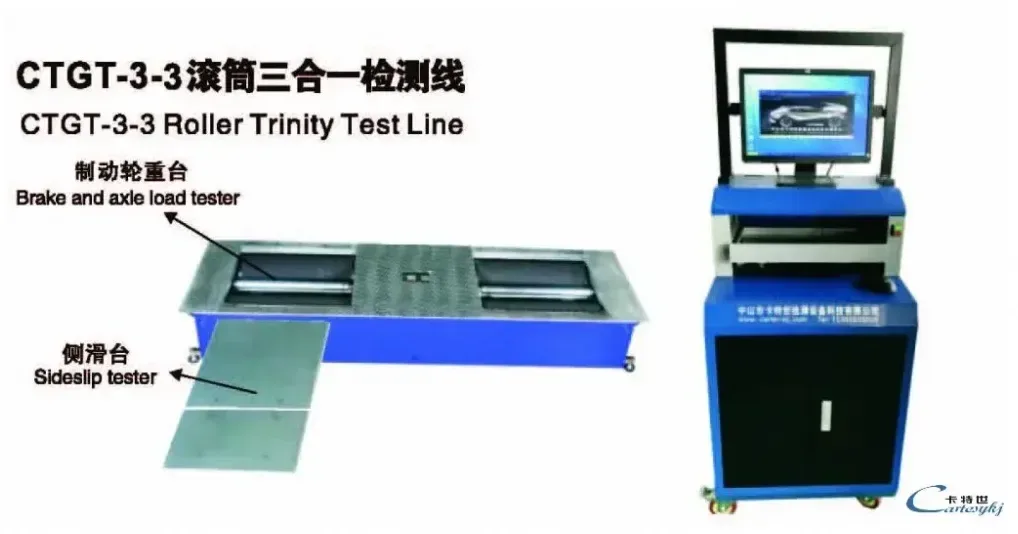 Caption: Display, control and measurement architecture of a new-energy vehicle inspection line.
Frequently Asked Questions About EV Vehicle Inspection Lines
Are Electric Vehicles Exempt from Emissions Testing?
In many markets, battery-electric vehicles are exempt from tailpipe emissions tests because they produce no exhaust. That exemption does not remove roadworthiness or safety obligations. Requirements differ widely — some regions require a safety inspection, others require an annual proof of insurance or a basic roadworthiness check. Confirm the rule where the vehicle is registered.
How Often Does an Electric Vehicle Need to Be Inspected?
It depends on local law and the vehicle's use. Private vehicles often follow the same inspection interval as combustion cars, while fleets and commercial vehicles may face shorter cycles. A pre-purchase inspection is a separate event and is worth doing regardless of the legal schedule, because battery condition changes with age and use.
How Much Does a Comprehensive EV Inspection Cost?
Cost varies by market, vehicle type, and how deeply the battery is tested. A basic compliance check is usually the least expensive, while a full pre-purchase inspection with a detailed battery health report costs more because it needs extra lane time and equipment. Ask for a written scope and a price breakdown covering battery testing, diagnostics, road test, and report format.
Summary
An EV inspection line replaces the tailpipe test with checks that actually matter for an electric vehicle: battery health, thermal management, high-voltage safety, software integrity, and conventional chassis components. The value comes from the process — a fixed workflow, stated thresholds, and a report that records what was measured and why it passed or failed. Whether you operate a public lane, a dealership, or a mobile unit, specify the electric vehicle battery testing equipment around your vehicle mix and the decisions your reports need to support.
Ready to configure a line for your vehicle mix? Tell us your daily throughput and BEV/PHEV ratio, and our engineers will send a layout and quote within one working day.