
Brake & Axle Load Testing Equipment
Vehicle Axle (Wheel) Load Tester | CTZZ-3/CTZZ-10/CTZZ-15
Inaccurate dynamic weight calculation presents an immediate technical and commercial bottleneck for high-throughput testing lanes. When dynamic axle measurements drift, the core mathematical formulas that govern brake e...


Inaccurate dynamic weight calculation presents an immediate technical and commercial bottleneck for high-throughput testing lanes. When dynamic axle measurements drift, the core mathematical formulas that govern brake efficiency calculations fail, creating significant operational risks during statutory compliance audits. Integrating an industrial Wheel Load Tester resolves this critical measurement challenge by capturing individual wheel mass, combined axle load mass, and total vehicle mass under rigorous continuous drive-through conditions.
Modern testing facilities demand rapid vehicle cycle times without compromising the measurement resolution of high-precision strain gauges. Weighing platforms deployed on automated inspection lines must reliably output stable data to meet stringent vehicle inspection standards while maintaining long-term structural durability under heavy cyclical loads. This engineering overview breaks down the verified technical parameters, mechanical architectures, and operational selection criteria of the CTZZ series Wheel Load Tester platform.
Table of Contents
- Verified Equipment Definition and Application Scope
- Buyer Value and Sourcing Considerations Supported by Supplied Facts
- Verified Technology Trends and Classifications
- Documented Materials, Quality Controls, and Sensor Components
- Practical Sourcing and Risk-Mitigation Guidance
- Frequently Asked Questions
- Engineering Consultation and Technical Support
1. Verified Equipment Definition and Material/Application Scope
A specialized Wheel Load Tester is an electro-mechanical dynamic weighing station engineered to quantify the precise vertical force exerted by each individual wheel contact patch. By determining the exact vertical downward load on each side of an axle, the system provides the fundamental mass baseline required for calculating braking efficiency across diverse commercial and passenger vehicle categories.
Operating as a foundational Axle Load Test Bench, the CTZZ instrumentation line executes three primary weighing determinations: wheel mass measurement, axle load mass calculation, and overall vehicle mass aggregation. The recorded weighing values directly feed into station diagnostic systems, serving as an indispensable mathematical factor for the calculation of brake efficiency and dynamic balance across each vehicle axle.
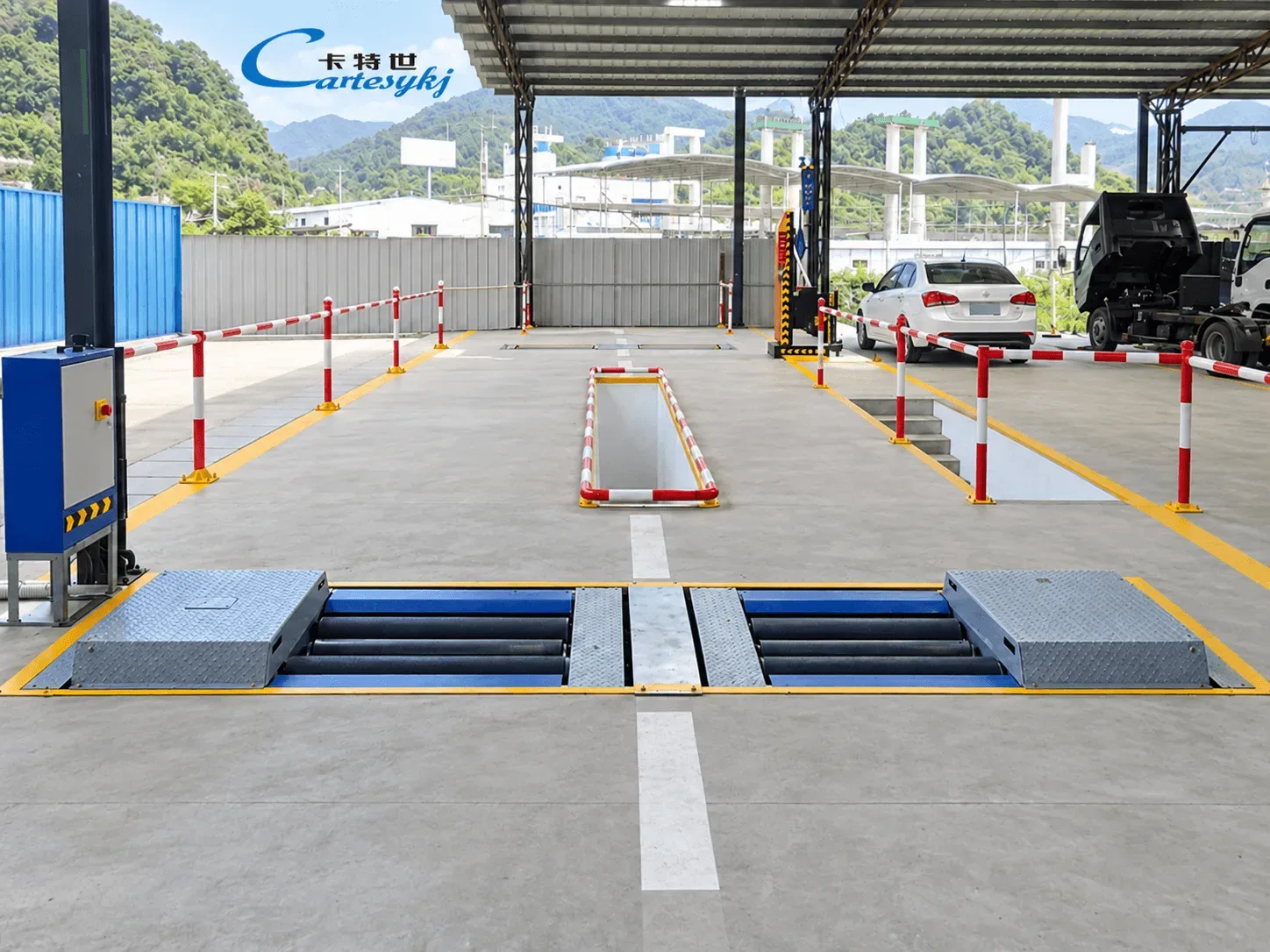
Within a modern automatic vehicle inspection system, this dynamic weighing bench is positioned strategically along the diagnostic sequence, typically operating alongside roller brake testers and sideslip evaluation plates. High-speed instrument control hardware acquires signals at the instant of drive-through, instantly transmitting verified wheel and axle values to supervisory management software without requiring manual operator intervention.
The operational application scope spans municipal test depots, commercial transport maintenance yards, fleet logistics hubs, and vehicle assembly verification lines built by an experienced Automotive Inspection Line Manufacture partner. Systems are categorized across distinct weight capacities to service light passenger cars, medium-duty logistics transporters, and heavy multi-axle freight haulers.
Whether testing two-axle delivery vans or tri-axle cargo transports, implementing a purpose-built Wheel Load Tester ensures that baseline weight parameters remain accurate, providing repeatable data that upholds mandatory statutory compliance frameworks across the complete testing sequence.
2. Buyer Value and Sourcing Considerations Supported by Supplied Facts
Procuring an Axle Load Test Bench requires balancing structural endurance, equipment dimensional footprint, and rapid operational throughput. Inspection stations handling high daily traffic volumes cannot afford equipment bottlenecks caused by slow static stop-and-go weighing cycles.
The CTZZ series Wheel Load Tester addresses throughput challenges by providing a dedicated quick drive-through testing mode. Vehicles transit across the active weighing plates at continuous low speeds, allowing the internal instrumentation control system to measure wheel mass and axle load mass dynamically. This rapid testing cycle makes the overall detection efficiency extremely high, preventing line congestion during peak inspection shifts.
Engineering Parameter
CTZZ-3 Platform
CTZZ-10 Platform
CTZZ-15 Platform
Max. Passing Axle Load (kg)
3,000
10,000
15,000
Wheel Load Measuring Range (kg)
0–1,500
0–5,000
0–7,500
Weighing Plate Dimensions (mm)
800 × 500
1,000 × 800
1,100 × 800
Tread / Track Width (Inside/Outside mm)
700 / 2,400
700 / 2,700
700 / 2,900
Installation Dimensions (mm)
2,700 × 660 × 200
3,000 × 960 × 220
3,000 × 960 × 220
Foundation Fastener Requirement
No anchor bolt required
No anchor bolt required
No anchor bolt required
Control Architecture
Instrument control system
Instrument control system
Instrument control system
Equipment selection directly aligns with vehicle fleet categories. The CTZZ-3 model delivers a maximum passing axle load of 3,000 kg and a wheel load measuring range of 0–1,500 kg, making it ideal for compact passenger cars, sedans, and light vans. The 800×500 mm weighing plates support inside/outside tread dimensions of 700/2,400 mm within a compact 2,700×660×200 mm chassis.
For mid-tier commercial operations, the CTZZ-10 Wheel Load Tester provides a maximum passing axle load capacity of 10,000 kg and an extended wheel load measuring range of 0–5,000 kg. Its expanded 1,000×800 mm weighing plates comfortably bridge track widths from 700 mm up to 2,700 mm inside a 3,000×960×220 mm footprint.
For demanding heavy-vehicle inspection corridors, the CTZZ-15 Wheel Load Tester offers a rugged 15,000 kg maximum passing axle load rating with an individual wheel load measuring range of 0–7,500 kg. Equipped with 1,100×800 mm weighing plates and supporting track widths up to 2,900 mm, it accommodates commercial tractor-trailers, municipal buses, and specialized heavy transports.
3. Verified Technology Trends and Classifications
Modern testing operations are moving rapidly toward modular, pit-shallow hardware designs that integrate directly into an automated supervisory network. Traditional weighing platforms frequently required extensive civil foundation excavations, deep concrete pits, and complex anchoring systems that extended commissioning schedules and increased installation costs.
The CTZZ Wheel Load Tester architecture eliminates these installation complexities because no anchor bolt is required for structural foundation fastening. The low-profile chassis heights—200 mm for the CTZZ-3 and 220 mm for the CTZZ-10 and CTZZ-15—allow installation teams to drop the pre-assembled frames directly into shallow pit recesses, streamlining hardware alignment and operational debugging.
Another major technological trend addresses uneven force application during dynamic weighing. Conventional platforms often experience measurement inaccuracies when vehicles enter the weighing zone at an angle or brake unevenly. The CTZZ series features an anti-slanting weighting design that ensures accurate, stable measurement by mitigating lateral dynamic forces, allowing strain sensors to isolate vertical mass cleanly.
Signal acquisition relies on high-quality brand-name high-precision strain type sensors. These strain gauges deliver high test accuracy and stable signal repeatability across thousands of continuous drive-through loading cycles, providing the reliable data required for automated vehicle diagnostic facilities.
Supervised by an advanced instrument control system, the Wheel Load Tester links seamlessly with central diagnostic computers. This unified electronic workflow ensures instant load data processing, accelerating the overall vehicle diagnostic pass rate across commercial inspection stations.
4. Documented Materials, Quality Controls, and Sensor Components
Dynamic impact resistance depends fundamentally on rigid structural fabrication. Under continuous drive-through conditions, weak mechanical chassis experience micro-deflections that misalign internal load paths and introduce permanent measurement drift. The CTZZ Wheel Load Tester solves structural fatigue through an extra-strong structure body where the frame is welded as a whole to guarantee structural durability.
This fully welded monolithic design provides structural stiffness that resists cyclic dynamic shocks from rolling tires. By eliminating mechanical chassis bolt joints subject to loosening under heavy vibration, the platform maintains stable dimensional tolerances throughout its operational lifespan.
Internal sensing utilizes high-precision strain type sensors sourced from proven brand-name manufacturers. These strain transducers convert mechanical plate deflections into precise linear voltage signals, ensuring high test accuracy across the entire measuring range: 0–1,500 kg on the CTZZ-3, 0–5,000 kg on the CTZZ-10, and 0–7,500 kg on the CTZZ-15.
To satisfy rigorous vehicle inspection standards, the entire mechanical-electronic assembly undergoes precise calibration via its instrument control system. The unified welded structure, anti-slanting weighting mechanics, and strain-gauge components work together to ensure that measured values remain repeatable during continuous inspection operations.
Sourcing from an established Automotive Inspection Line Manufacture specialist guarantees that every weighing plate—ranging from 800×500 mm up to 1,100×800 mm—is built with the structural integrity needed to withstand passing axle loads up to 15,000 kg.
5. Practical Sourcing and Risk-Mitigation Guidance
Procuring weighing instrumentation for an automatic vehicle inspection system requires careful evaluation of civil pit geometry, vehicle track widths, and maximum anticipated axle loads. Specifying undersized equipment leads to operational bottlenecks and risks structural damage from overloaded vehicles.
First, cross-reference maximum passing axle load thresholds. If an inspection lane processes light passenger vehicles exclusively, the CTZZ-3 (3,000 kg axle limit) provides an optimized footprint. However, if mixed commercial fleets, light trucks, or public transit buses use the lane, plant managers should select the CTZZ-10 (10,000 kg capacity) or CTZZ-15 (15,000 kg capacity) to accommodate heavier vehicle profiles safely.
Second, match tread dimensions carefully. The CTZZ-3 covers inside/outside track widths of 700/2,400 mm, the CTZZ-10 accommodates 700/2,700 mm, and the CTZZ-15 extends coverage to 700/2,900 mm. Selecting an adequate outer tread dimension ensures that wide commercial wheel arrangements remain fully on the weighing plates during drive-through testing.
Third, confirm pit excavation specifications against chassis dimensions. With overall footprints of 2,700×660×200 mm for the CTZZ-3 and 3,000×960×220 mm for the CTZZ-10 and CTZZ-15, civil teams can construct shallow foundation recesses. Because no anchor bolts are required, mechanical positioning and initial debugging proceed quickly without drilling into reinforced concrete foundation beds.
Finally, ensure seamless integration between the instrument control system and existing lane controllers. Reliable dynamic weight data is essential for brake efficiency calculations; verified communication protocols between the Wheel Load Tester and line computers prevent manual transcription errors and guarantee full compliance with local regulatory guidelines.
Selecting an engineered Wheel Load Tester supported by proven welded fabrication and brand-name strain gauge hardware ensures that testing lanes achieve high throughput, consistent measurement accuracy, and long-term equipment reliability.
Frequently Asked Questions
Why is a dedicated Wheel Load Tester essential for calculating vehicle brake efficiency?
A Wheel Load Tester captures exact individual wheel mass and axle load mass values under dynamic conditions. Regulatory vehicle inspection codes require actual axle weight values to determine brake force distribution and calculate overall braking efficiency percentages accurately.
How does the no-anchor-bolt design benefit test lane installation?
The fully welded extra-strong body structure sits securely in a shallow foundation pit (200 mm to 220 mm depth) without mechanical anchor fasteners. This design simplifies civil engineering preparation, prevents concrete cracking around anchor holes, and significantly reduces installation and debugging time.
What operational advantages does the anti-slanting weighting design provide?
The anti-slanting weighting design stabilizes the weighing plate against lateral and angular forces when vehicles roll across the platform. By isolating lateral vector noise, the brand-name strain type sensors measure only true vertical loads, ensuring accurate and stable data during continuous drive-through testing.
Which CTZZ model is suitable for heavy-duty commercial vehicle inspection?
The CTZZ-15 is built specifically for heavy-duty commercial vehicle lanes. It handles a maximum passing axle load of 15,000 kg, offers a wheel load measuring range of 0–7,500 kg, features 1,100×800 mm weighing plates, and accommodates broad tread widths from 700 mm to 2,900 mm.
Engineering Consultation and Technical Support
Integrating a high-throughput Wheel Load Tester or complete Axle Load Test Bench requires coordinated civil planning, dimensional alignment, and digital system integration. Contact our engineering specialists to review detailed dimensional drawings, pit specifications, and instrumentation options for your inspection facility.
|(注:部分内容由豆包工作 AI 生成)
Related Products
Compare related inspection systems
Brake & Axle Load Testing Equipment
Roller Brake Tester With Axle Load | CTFZ-3B/CTFZ-10B/CTFZ-13B
View Product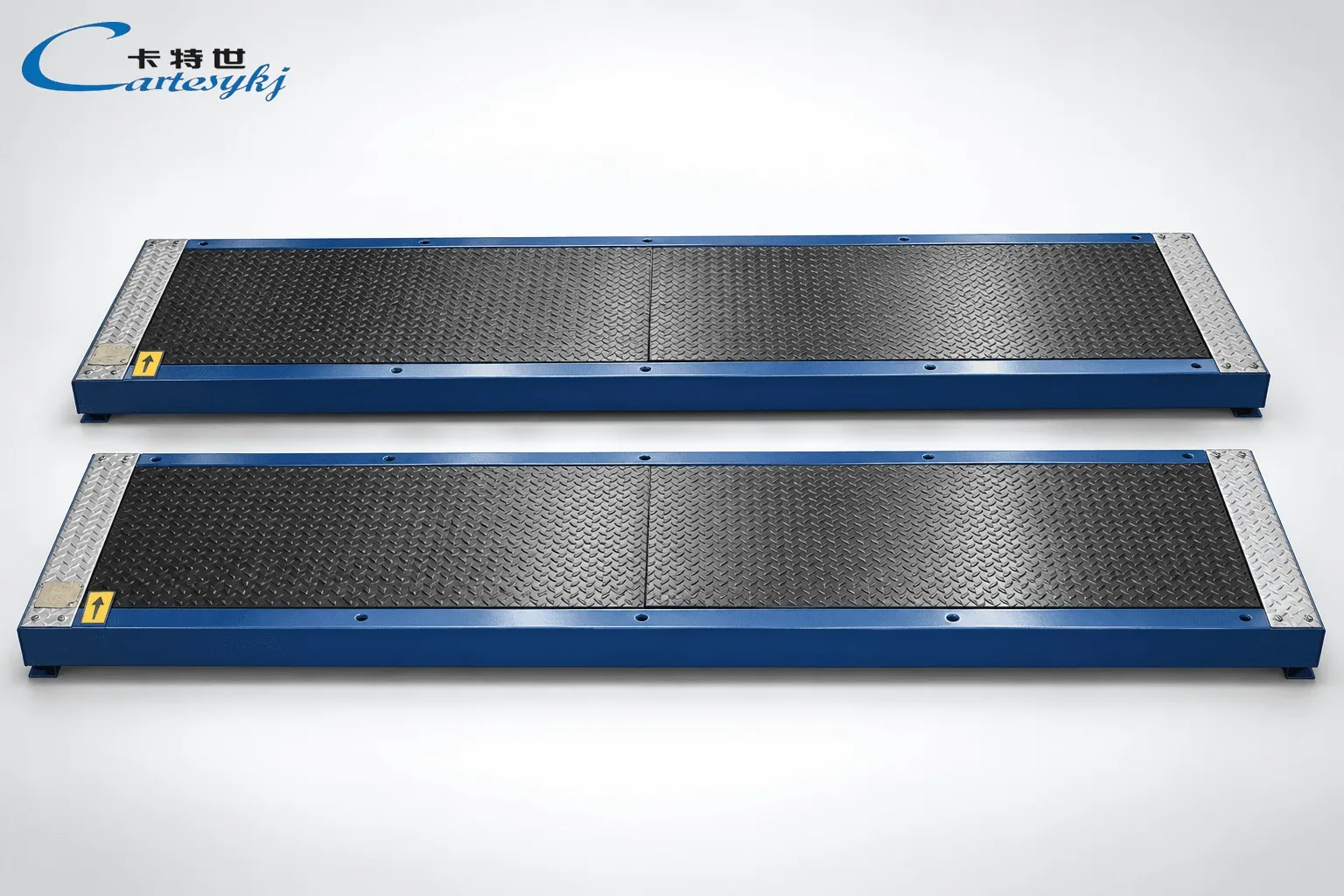
Request a Quote
Request configuration and pricing for your project.
Share your vehicle type, inspection lane layout, target capacity, and required model configuration for Vehicle Axle (Wheel) Load Tester | CTZZ-3/CTZZ-10/CTZZ-15.
Share the project location, vehicle types, inspection scope, applicable standards, target throughput, site conditions and current stage. We will confirm the configuration scope before discussing pricing.