
Insights
How to Choose Vehicle Inspection Equipment for Sale: A Vocational Training Guide
A vocational training guide to vehicle inspection equipment for sale: core test benches, 3-in-1 and 4-in-1 systems, technical parameters and procurement criteria.
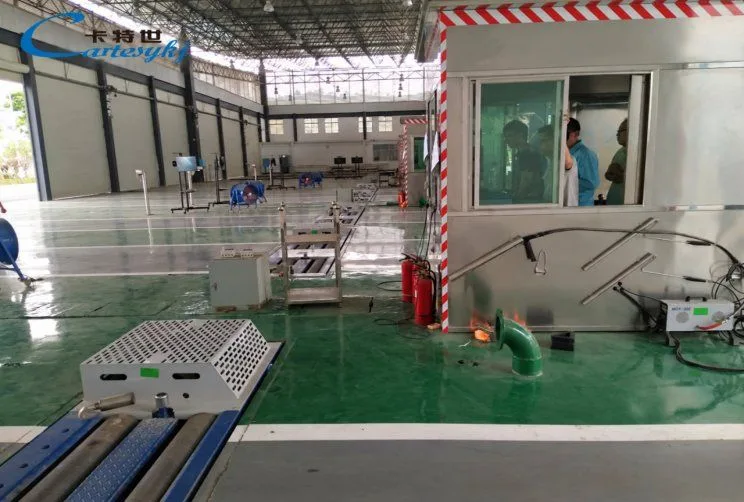
Summary: Zhongshan Cartesy Testing Equipment Technology Co., Ltd. provides vehicle inspection equipment training for vocational institutions, research organizations, and quality inspection facilities. Its solutions integrate a comprehensive range of stations for brake testing, axle-load measurement, side-slip testing, four-wheel alignment, suspension testing, and exhaust emissions analysis. Available arrangements include integrated 3-in-1 and 4-in-1 systems, as well as mobile and fixed installations. See the CTGT-3-4 three-in-one inspection line for an example configuration.
Table of Contents
- Definition of Automotive Teaching and Testing Lines
- Technical Features and Automation Capabilities
- Types of Automotive Teaching and Testing Lines
- Educational and Industrial Applications
- Selection and Procurement Guide for Automotive Testing Lines
What Is an Automotive Teaching and Testing Line?
Core Functions and Educational Objectives
The educational objectives of a Cartesy teaching and testing line cover equipment preparation, vehicle positioning, test execution, exception recognition, and record management. Course assessments should distinguish between the student’s ability to perform the procedure correctly and the vehicle’s ability to meet the inspection requirements.
With a modular design and multilingual control software, for which Cartesy holds software copyrights, institutions can organize instructor demonstrations, supervised practice, and individual assessments on the same platform. The software also allows live measurements, historical data, and simulation examples to be distinguished.
Complete Vehicle Testing Line Workflow
A typical Cartesy teaching-line workflow is: vehicle registration → preliminary inspection → equipment compatibility confirmation → station testing → data review → report generation. Instructors can assign tasks at each stage, requiring students to explain the basis of their actions and submit supporting records.
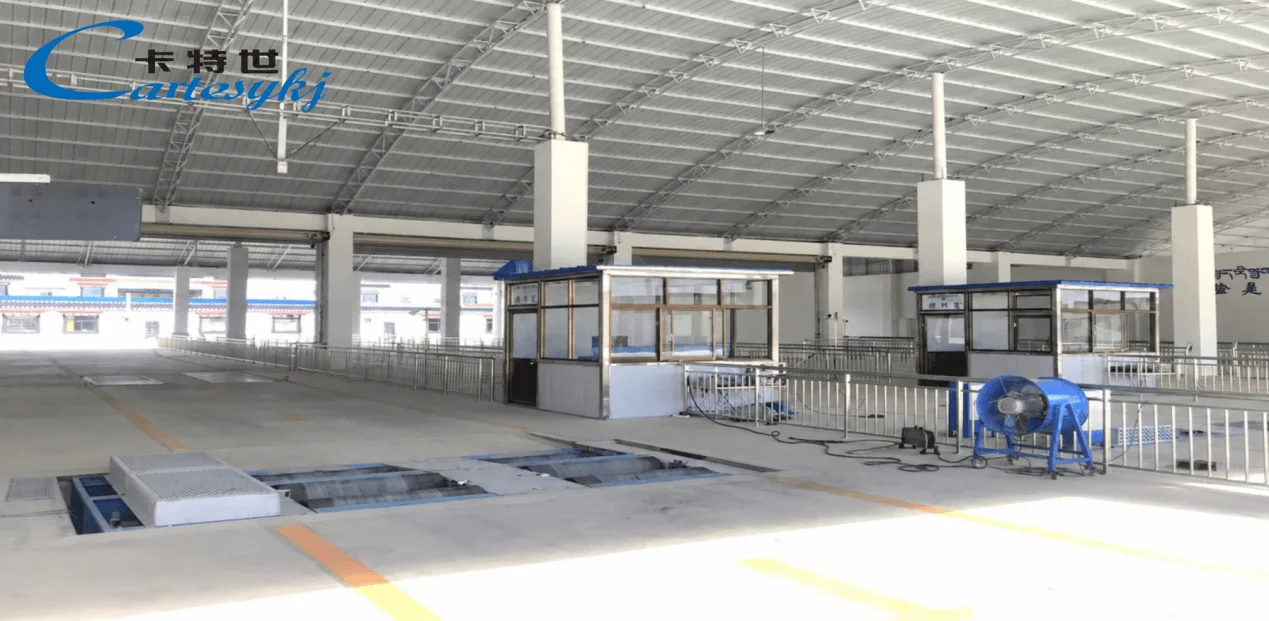
Covered inspection bays and control cabins in a vehicle testing station
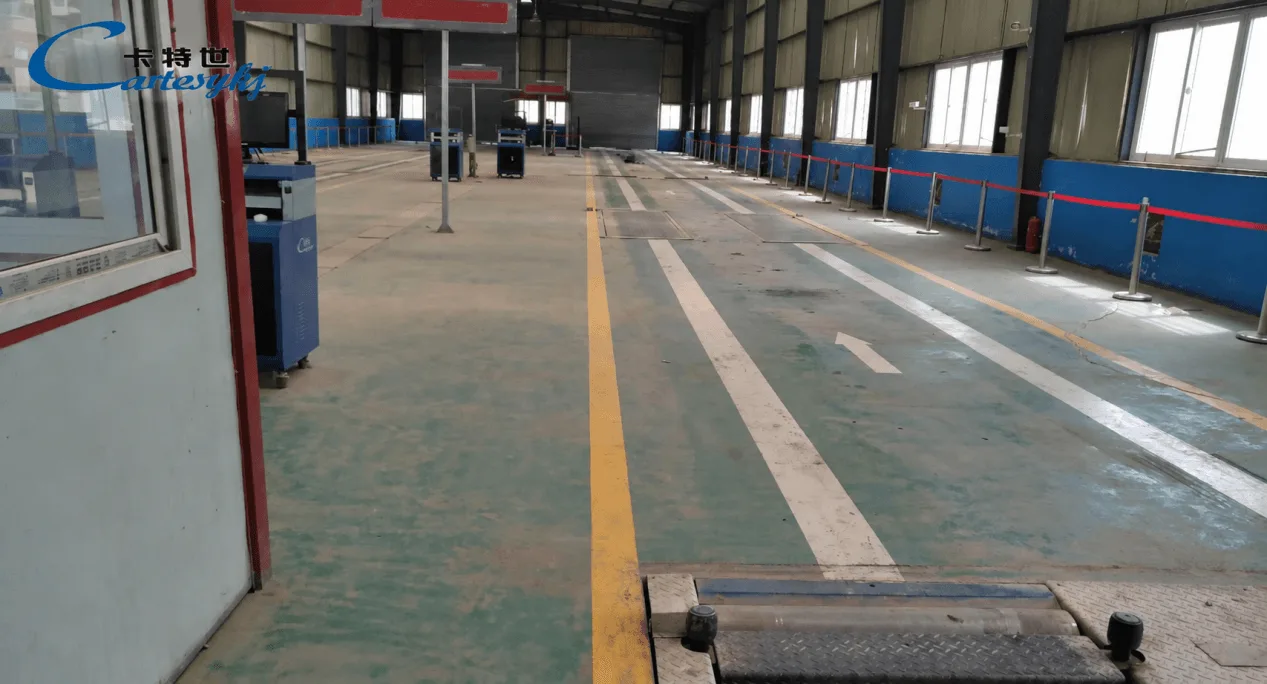
Indoor inspection lane with marked test positions
The specific test sequence follows the equipment layout and operating procedures. Original results, reasons for retesting, and corrective-action information are retained for comparison and instructional review. Cartesy’s inspection control and data management system supports data export and historical record management, providing a platform for archiving training records.
Key Testing Stations and Equipment Modules
Different modules perform different measurement tasks. When planning a laboratory, institutions can first map curriculum objectives to inspection items and equipment outputs, then define the procurement scope.
| Equipment Module | Main Teaching Task | Outputs to Specify | Selection Priorities |
|---|---|---|---|
| Roller brake tester | Brake-force measurement and result interpretation | Brake force and supported calculated indicators | Measurement range, vehicle compatibility, and test procedure |
| Axle or wheel-load tester | Load measurement and its relationship to brake assessment | Individual-wheel values, axle totals, or both | Separate confirmation of measuring range and structural load capacity |
| Side-slip tester | Lateral-displacement measurement and preliminary screening | Side-slip results with specified units | Single- or double-plate configuration, range, and approach conditions |
| Four-wheel alignment system | Wheel-geometry measurement | Supported alignment parameters | Vehicle coverage, measurement setup, and working space |
| Suspension tester | Suspension-response observation and analysis | Clearly defined response curves or indicators | Test method, loading conditions, and evaluation criteria |
| Speedometer, headlight, and sound-level instruments | Instrument-specific measurement and control of test conditions | Speed comparison, optical quantities, and sound level | Separate confirmation of each instrument’s functions and environmental requirements |
| Exhaust gas analyzer | Emissions sampling and data interpretation | Supported gas concentrations | Fuel compatibility, sampling requirements, and maintenance conditions |
| Environmental simulation equipment | Investigation of how defined environmental conditions affect performance | Controlled environmental values and corresponding test data | Separate facility scope, control capabilities, and supporting services |
Roller Brake and Axle Load Test Bench
A roller brake test bench measures braking response under specified conditions. When equipped with a weighing function, it can provide the corresponding wheel-load or axle-load data for instruction and defined brake-performance calculations.
Courses should distinguish brake force, load inputs, and calculated results, explaining their respective sources, units, and applicable conditions. Axle-load capacity must not be treated as a weighing range, and roller brake results must not be equated directly with road stopping distance.
Side-Slip Testing System
A side-slip testing system measures lateral displacement as the vehicle’s wheels pass over the test plate under a specified procedure. Instruction focuses on vehicle approach conditions, the meaning of the reading, and further checks when results exceed the applicable limits.
Single-plate and double-plate configurations should be checked against the specific model. Side-slip testing can support screening, but it cannot independently identify a fault in a particular steering or suspension component.
Four-Wheel Alignment System
A four-wheel alignment system measures the wheel-geometry parameters it supports. It is suitable for teaching alignment principles, measurement procedures, and comparisons before and after adjustment.
Four-wheel alignment and side-slip testing are separate functions. Comprehensive alignment training requires separately specified equipment, with confirmed vehicle compatibility, measurement conditions, and sufficient space for adjustment work.
Speedometer, Headlight, and Sound Level Testing
Speedometer training primarily compares the vehicle’s indicated speed with a reference speed. Headlight training may cover beam aim, beam pattern, or specified optical quantities. Sound-level testing introduces acoustic measurement and control of test conditions.
Instrument capabilities, units, and operating procedures should be defined separately for each category. Headlight testing also requires attention to vehicle attitude and measurement references, while sound-level testing requires control of background conditions and other influencing factors according to the selected method.
Exhaust Gas Analyzer and Environmental Simulation Equipment
An exhaust gas analyzer can support emissions-measurement training for compatible vehicles and fuel types. Courses should cover sampling preparation, instrument checks, result interpretation, and equipment maintenance. If smoke-opacity measurement is required, the corresponding instrument should be specified separately.
Environmental simulation equipment is a separate configuration. Controlling temperature, humidity, or other environmental conditions requires suitable facilities and technical capabilities; these functions should not be assumed to be included with conventional exhaust testing.
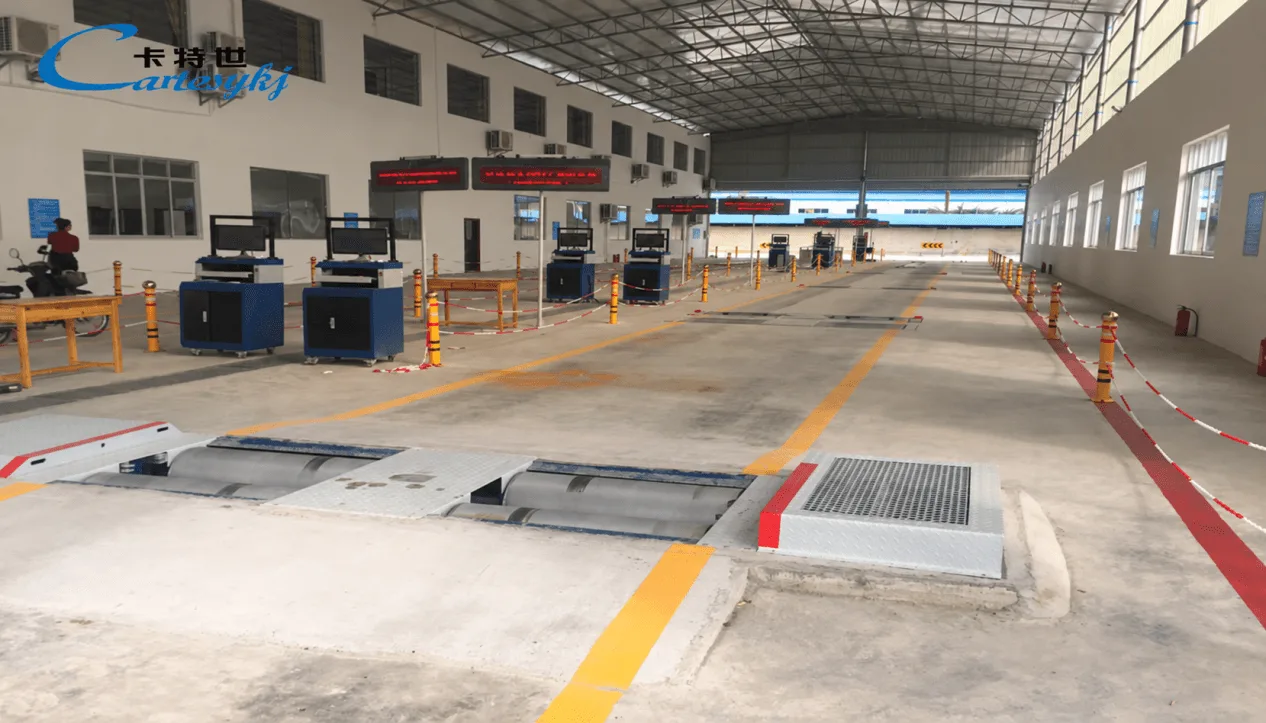
Multi-bay inspection station with test benches and operator consoles
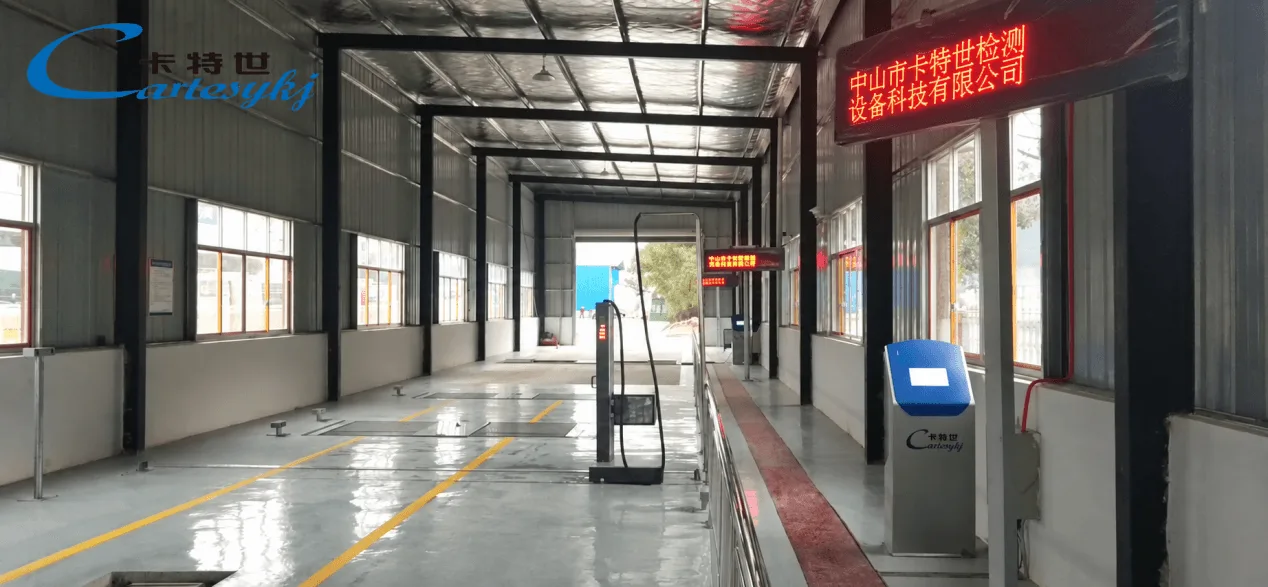
Inspection lane with control consoles and an LED display
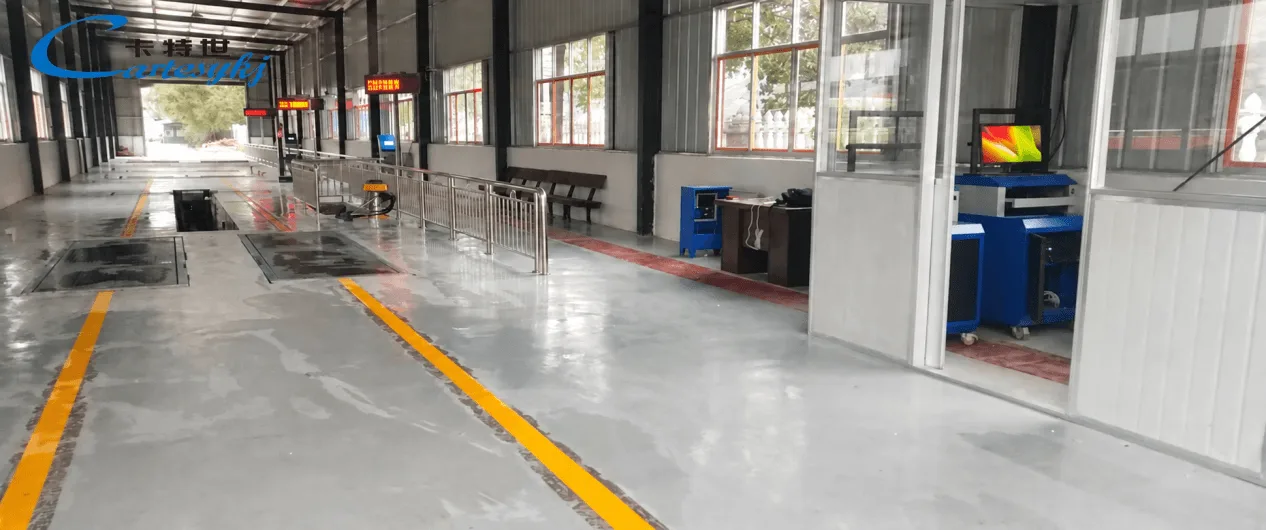
Side view of an indoor vehicle inspection line with control room
Technical Features and Automation Capabilities
Digital Test Automation and Data Management Software
Inspection software can acquire data from supported stations, display results, calculate defined indicators, and manage reports. Procurement specifications should identify which steps are automated and which still require operator involvement.
Teaching functions can be configured around requirements for instructor permissions, student information, experiment records, and data export. Live measurements, historical data, and simulation examples should be clearly distinguished to preserve the validity of experiment assessments.
Safety Assurance and Real-Time Fault Diagnostics
Safety provisions should match equipment risks and user competence. The configuration should define protective devices, emergency controls, operating permissions, inspection requirements, and instructor supervision responsibilities.
The scope of real-time diagnostics should also be defined. Monitoring the test equipment, retrieving vehicle fault information, and performing specialized diagnostics are different functions. An alarm does not replace a complete diagnosis, and automatic operation does not replace necessary supervision.
Types of Automotive Teaching and Testing Lines
3-in-1 and 4-in-1 Integrated Vehicle Testing Systems
In the product configurations discussed above, a 3-in-1 system generally combines brake testing, load measurement, and side-slip testing. A 4-in-1 system adds suspension testing. Whether the system reports wheel-load values, axle-load values, or both must be confirmed for the selected model.
Procurement documents should list core functions and optional equipment individually. The combination name alone does not establish measurement range, accuracy, or the complete scope of supply.
Light Passenger Vehicle Testing Lines vs. Heavy-Duty Truck Testing Lines
Differences between these lines should be assessed in terms of axle load, wheel track, tires, wheelbase, drivetrain configuration, and measurement ranges. Vehicle-category labels do not replace a detailed compatibility review.
In particular, permitted drive-over load, test load, weighing range, and total vehicle weight must remain distinct. Where the intended fleet includes special axle arrangements or drivetrain configurations, obtain the corresponding test procedures and compatibility statements.
Applications in Education and Industry
Vocational Institutions and Automotive Technical Training
Cartesy teaching and testing lines support courses organized around complete operating tasks, progressing from instructor demonstrations to supervised practice and individual assessments. Assessment covers preparation, correct operation, recording of readings, recognition of abnormal conditions, and technical communication, with task sheets and sample reports providing consistent evaluation criteria. Cartesy’s domestic customer base includes more than 100 educational and research institutions, offering references for similar institutions evaluating equipment.
Customer Technical Training and Handover Training
Cartesy’s delivery process covers solution design, equipment manufacturing, installation and commissioning, personnel training, and ongoing technical support. Training enables operators to carry out startup checks, confirm vehicle compatibility, follow inspection procedures, retrieve reports, and perform routine maintenance.
Training also addresses common exceptions, after-sales support contacts, and the respective responsibilities of operators and maintenance personnel. Software-operation training and acceptance of equipment measurement performance are documented separately. Training hours, the language of training materials, and assessment criteria are specified in the contract.
R&D Laboratories and Quality Inspection Centers
R&D laboratories require individual-channel data, synchronized acquisition, and configurable procedures, while quality inspection centers place greater emphasis on process consistency, evaluation criteria, and complete records. Cartesy equipment is used in applications such as ABS testing systems at automotive and motorcycle manufacturers, providing experience in manufacturing-stage testing. Research-grade data interfaces and synchronized acquisition capabilities must be confirmed separately.
Vehicle Testing Line Selection and Procurement Guide
Key Technical Parameters and Site Requirements
First define the vehicle list, curriculum objectives, required measurements, and number of users. Then check load limits, measurement ranges, vehicle geometry compatibility, electrical supply, and pneumatic services.
The site layout should show equipment positions, vehicle entry and exit routes, student observation areas, operator access, and maintenance space. Equipment dimensions alone do not represent the complete operating footprint.
Supplier Qualifications and Technical Capability
Supplier evaluation should consider demonstrated project experience, the quality of technical documentation, measurement-verification capability, and service organization, rather than relying solely on promotional materials.
Request comparable project references, model specifications, sample calibration or verification documents, software demonstrations, and a training delivery plan. Project references should identify the actual scope supplied, avoiding the assumption that capabilities from another configuration also apply to the proposed equipment.
International Certifications and Compliance Standards
Equipment conformity, laboratory accreditation, inspection-program acceptance, and personnel qualifications are separate requirements. Certification claims should be checked against the applicable model, standard edition, supporting documents, and scope.
ISO/IEC 17025 addresses the competence of testing and calibration laboratories; it is not a universal export certificate for vehicle inspection equipment. Procurement requirements should be determined according to the actual destination, intended use, and project requirements.
Turnkey Projects, Knocked-Down Supply, and After-Sales Support
A turnkey inspection-station project should define the scope of design, transport, installation, commissioning, training, and acceptance. Responsibilities for civil works, unloading, power supply, and site preparation should also be clearly assigned.
For knocked-down supply, agree on the degree of disassembly, local assembly tasks, required tools, technical support, and final verification. Semi-knocked-down and completely knocked-down supply should not be treated as interchangeable. After-sales evaluation should cover spare parts, maintenance, software licensing, upgrade compatibility, and service response arrangements.
To compare teaching and testing line proposals effectively, provide suppliers with the intended vehicles, curriculum, site layout, utility conditions, and reporting requirements, and request an itemized configuration list and acceptance plan.