
Speedometer & Roller Auxiliary Equipment
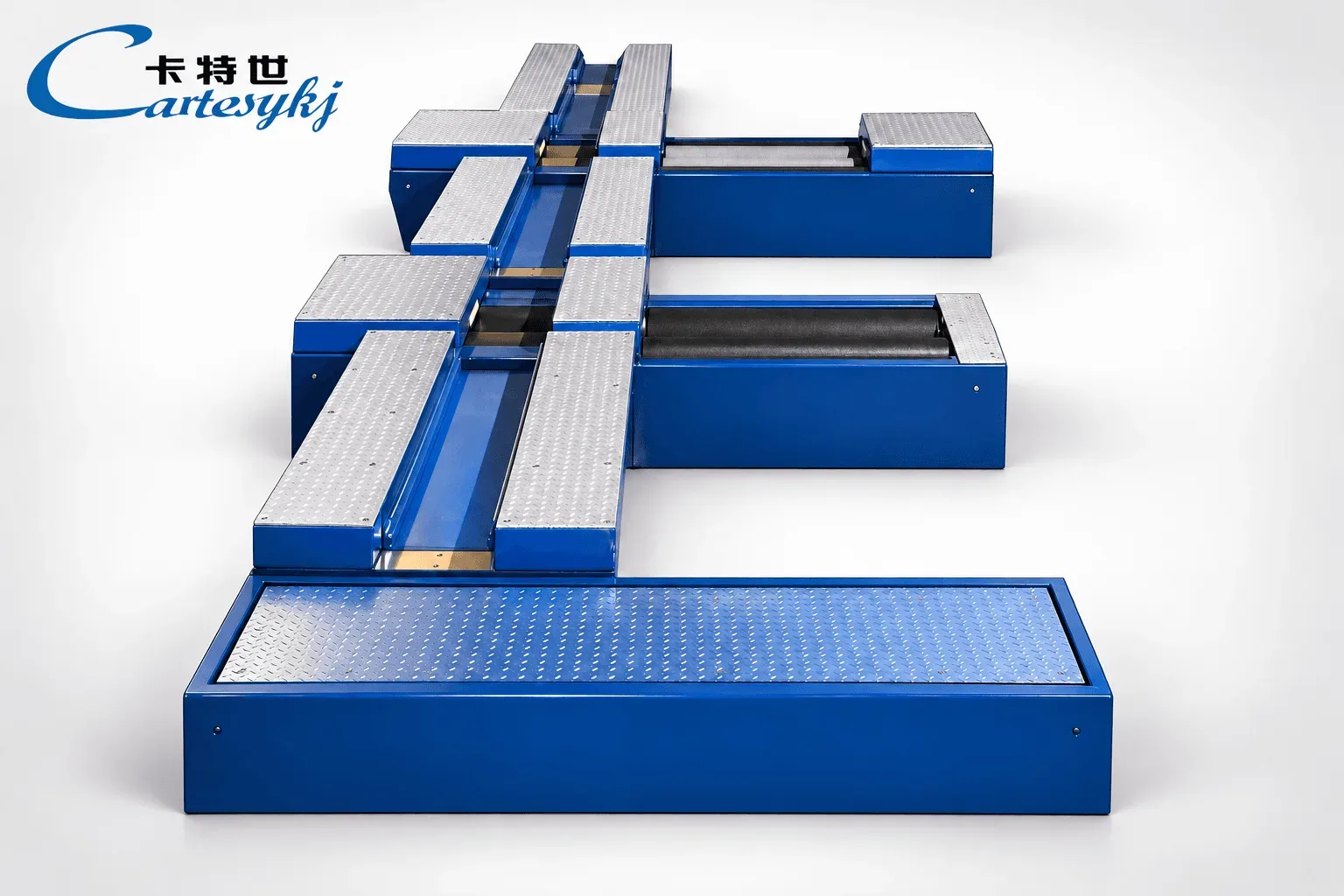
Vehicle Speedometer Tester | CTCS-3A/CTCS-10A/CTCS-10A
Inaccurate speed measurement during motor vehicle safety audits leads directly to compliance rejection, operational delays, and liability risks for testing centers. A Vehicle Speedometer Tester provides a controlled, ro...


Inaccurate speed measurement during motor vehicle safety audits leads directly to compliance rejection, operational delays, and liability risks for testing centers. A Vehicle Speedometer Tester provides a controlled, roller-based platform engineered to verify on-board vehicle speedometer indication errors during simulated driving conditions. Manufactured by Cartesykj, the CTCS series delivers dependable mechanical inspection capabilities across light passenger cars, commercial transport units, and multi-axle freight carriers.
Equipping an automotive inspection line requires rigorous alignment between vehicle mechanical dimensions, operational pneumatic supply, and equipment structural capacities. The Cartesykj Vehicle Speedometer Tester platform addresses these technical demands through robust fabrication, pneumatic vehicle access mechanisms, and non-contact sensor velocity tracking.
Table of Contents
- Equipment Definition and Material/Application Scope
- Buyer Value and Technical Sourcing Considerations
- Verified Technology Trends and Classifications
- Documented Materials, Quality Controls, Certifications, and Components
- Practical Sourcing and Risk-Mitigation Guidance
- Frequently Asked Questions
- Engineering Consultation and Specifications Support
1. Equipment Definition and Material/Application Scope
The Cartesykj Vehicle Speedometer Tester is specialized automotive testing equipment engineered to assess vehicle speedometer indication accuracy. Positioned within a stationary testing bay, the system inspects driven wheels on high-traction rollers over an operational speed window of 0–130 km/h across all product variants.
The CTCS product series is categorized into three distinct models based on chassis load ratings and dimensional envelopes:
- CTCS-3A: Designed for light vehicle testing with a maximum permissible axle load of 3000 kg and an applicable wheel tread range of 700 / 2400 mm.
- CTCS-10A: Built for medium-to-heavy transport with a maximum permissible axle load of 10000 kg and a wheel tread range of 700 / 2700 mm.
- CTCS-15A: Engineered for heavy commercial vehicle inspection accommodating up to 15000 kg maximum permissible axle load with a wide wheel tread span of 700 / 2900 mm.
This automotive speedometer tester platform serves motor vehicle safety inspection stations, automotive inspection centers, government-regulated transit testing bays, motor vehicle testing facilities, and commercial vehicle inspection line projects where vehicle track dimensions and axle loads align with documented equipment limits.
In high-throughput vehicle safety inspection equipment installations, the vehicle speedometer test platform functions as a critical station. Motor vehicle safety inspection regulations routinely mandate periodic speedometer indication error testing to confirm that driver dashboard instrumentation matches real ground velocity, mitigating over-speed hazards and road transport risks.
2. Buyer Value and Sourcing Considerations Supported by Supplied Facts
When selecting vehicle speedometer testing equipment, procurement directors and test lane engineers must evaluate mechanical load limits, wheel tread compatibility, and shop utility requirements. Specifying equipment based only on nominal axle load creates operational bottlenecks if wheel track width or shop compressed air lines fall outside system specifications.
A plant manager or vehicle inspection station equipment contractor must assess how vehicle dimensions interface with the physical roller geometry. A passenger car speedometer tester setup requires adequate inner roller clearance, whereas a heavy vehicle speedometer tester must provide sufficient outer roller width to handle wide commercial track configurations without sidewall rubbing.
The table below provides direct technical comparison data for the Cartesykj CTCS roller speedometer tester series based strictly on documented factory parameters:
Specification Parameter
Model CTCS-3A
Model CTCS-10A
Model CTCS-15A
Max. Permissible Axle Load
3000 kg
10000 kg
15000 kg
Applicable Wheel Tread (Inner / Outer)
700 / 2400 mm
700 / 2700 mm
700 / 2900 mm
Testing Speed Range
0–130 km/h
0–130 km/h
0–130 km/h
Roller Dimensions (Diameter × Length)
Ø190 × 850 mm
Ø190 × 1100 mm
Ø190 × 1100 mm
Operating Air Supply Pressure
0.5–0.6 MPa
0.7–0.8 MPa
0.7–0.8 MPa
Overall Dimensions (L × W × H)
2700 × 750 × 400 mm
3200 × 900 × 480 mm
3200 × 900 × 480 mm
Understanding these parameters prevents civil foundation mismatches and pneumatic supply starvation during high-throughput testing cycles. Sourcing teams can accurately balance capital investment against fleet coverage by matching test lane capacity directly to these documented physical ratings.
For operations handling mixed fleets, selecting an oversized Vehicle Speedometer Tester like the CTCS-10A or CTCS-15A enables facilities to process light commercial vans and heavy transport vehicles on a shared platform, provided the vehicles meet the 700 mm minimum inner track limitation.
3. Verified Technology Trends and Classifications
The vehicle speed test bench relies on mechanical roller inertia coupled with precision sensor feedback. During vehicle speedometer inspection, the test vehicle drives onto the vehicle speedometer test platform, aligning its driven wheels between the dual roller sets. A pneumatic airbag lifting system deflates, lowering the vehicle drive axle into the roller cradle.
Once settled, the vehicle driver accelerates the wheels over the knurled roller surface. A non-contact sensor monitors roller rotational velocity in real time, transmitting linear surface speed to the inspection display. The operator conducts speedometer indication error testing by comparing the visual dashboard reading directly against the platform speed testing points, which can be indexed via a wireless remote control.
Roller based speedometer testing operates as an idling, non-driven mechanical platform. The rollers do not supply motorized driving power to the vehicle wheels; instead, the vehicle driven axle imparts rotational kinetic energy directly to the cylindrical roller surface. This design ensures that the roller peripheral velocity reflects tire surface speed under steady operational rotation.
A critical engineering distinction must be maintained regarding equipment classifications. The Cartesykj CTCS Vehicle Speedometer Tester functions strictly as a roller-based speedometer indication error test bench. It is neither a chassis dynamometer nor an engine power dynamometer. It does not measure engine torque, horsepower, road-load simulation, or transient acceleration curves. Furthermore, the CTCS automotive series is distinct from specialized motorcycle speedometer testing units.
Inspection Equipment Type
Primary Inspection Objective
Load Application Mode
Operational Mechanism
Vehicle Speedometer Tester (CTCS Series)
Speedometer indication error testing (0–130 km/h)
Free-wheeling driven contact; non-absorptive roller platform
Pneumatic airbag vehicle access, non-contact sensor speed tracking
Roller Brake Tester
Braking force, imbalance, and retarding efficiency
Motor-driven rollers with torque measurement transducers
Electric motor drive with mechanical load reaction strain gauges
Side Slip Tester
Dynamic steering toe and wheel alignment tracking
Free-sliding mechanical plate displacement
Mechanical slide plate connected to linear displacement sensor
Chassis Dynamometer
Engine power curves and emission testing
Power absorption units (eddy-current / hydraulic retarders)
Controlled power dissipation simulating aerodynamic and gradient drag
As documented above, vehicle inspection line solutions integrate multiple discrete testing benches to assess overall vehicle safety. While a brake tester evaluates stopping capacity and an axle load tester confirms wheel weights, the speedometer test bench isolates speed indication error to verify instrument reliability.
4. Documented Materials, Quality Controls, Certifications, and Components
The structural integrity of vehicle inspection station equipment determines its operating life under continuous heavy axle impacts. As an established vehicle testing equipment manufacturer, Cartesykj incorporates several documented mechanical and electronic safeguards across the CTCS Vehicle Speedometer Tester series:
- High-Strength Welded Structure: The frame uses an integrated welded configuration engineered to handle repetitive dynamic loads. According to documented factory specifications, the structural base does not require anchor bolts for installation, streamlining pit preparation and civil floor planning.
- Specially Treated Roller Surface: Each Ø190 mm roller receives a specialized knurling treatment. This knurled finish maximizes the friction coefficient between tire rubber and steel, preventing excessive slip during acceleration while providing superior surface wear resistance under abrasive commercial vehicle tires.
- Synchronized Pneumatic Airbag Lifting: A pneumatic lift system driven by plant compressed air (0.5–0.8 MPa depending on model) elevates and lowers the vehicle smoothly, ensuring balanced left-to-right synchronization to facilitate safe vehicle entry and exit from the testing platform.
- Double Safety Interlock Mechanism: To protect equipment and operating personnel, the control logic features an automatic safety lock that disengages and locks the lifting mechanism whenever roller peripheral speed exceeds 5 km/h.
- Wheel Protection Mechanisms: Built-in protective assemblies guide vehicle tires and prevent rims or sidewalls from contacting stationary structural components during high-speed rotation.
- Non-Contact Sensor: Linear speed pickup is captured via an air-gapped non-contact sensor, eliminating mechanical friction wear, preventing signal degradation, and maintaining speed measurement reliability across the complete 0–130 km/h spectrum.
- Wireless Remote Control: Speed testing points can be selected and controlled via a handheld wireless remote control, allowing test personnel to index testing points directly from the driver seat.
Maintaining these mechanical subsystems requires strict attention to pneumatic cleanliness and mechanical lubrication. Sourcing directors should note that while components like the non-contact sensor and welded framework eliminate frequent replacement, pneumatic filters must remain free of moisture to protect lifting airbags.
5. Practical Sourcing and Risk-Mitigation Guidance
Sourcing an industrial Vehicle Speedometer Tester requires precise evaluation of fleet compatibility, physical bay layout, and plant pneumatic infrastructure. Buyers evaluating tenders must systematically verify three core engineering criteria:
- True Axle Load Rating: Verify that the heaviest projected axle load does not exceed model thresholds (3000 kg for CTCS-3A, 10000 kg for CTCS-10A, 15000 kg for CTCS-15A). Commercial vehicle speedometer testing requires factoring in fully loaded service vehicles if gross axle ratings are inspected in the test lane.
- Tread Range Constraints: Ensure inner and outer tire tracks fit the roller bed. While the CTCS-15A provides an expansive 700 / 2900 mm wheel tread capability, compact vehicles tested on wide platforms must still satisfy the 700 mm minimum inner track spacing to sit safely on both rollers.
- Pneumatic Supply Delivery: The heavy-duty CTCS-10A and CTCS-15A platforms require sustained airline delivery between 0.7 and 0.8 MPa to actuate the airbag lift, whereas light-vehicle lines running the CTCS-3A operate on 0.5–0.6 MPa. Insufficient airline volume can cause lifting delays between inspection cycles.
The table below outlines a practical sourcing evaluation matrix comparing the operational readiness factors across all three CTCS variants:
Evaluation Factor
Model CTCS-3A
Model CTCS-10A
Model CTCS-15A
Target Fleet Profile
Passenger cars, light utility vehicles, minivans
Medium commercial trucks, public transit buses
Heavy transport trucks, commercial freight haulers
Installation Anchor Requirement
No anchor bolts required (welded frame)
No anchor bolts required (welded frame)
No anchor bolts required (welded frame)
Air Line Sizing Pressure
0.5–0.6 MPa regulated shop air
0.7–0.8 MPa heavy commercial air supply
0.7–0.8 MPa heavy commercial air supply
Roller Working Width
850 mm per side (Ø190 mm)
1100 mm per side (Ø190 mm)
1100 mm per side (Ø190 mm)
Speed Interlock Safety Lock
Active lock engaged > 5 km/h
Active lock engaged > 5 km/h
Active lock engaged > 5 km/h
Because indication error tolerances, detailed software reporting protocols, and vehicle pass/fail acceptance thresholds vary across domestic and international inspection regimes, sourcing teams should align equipment hardware dimensions with local vehicle inspection line regulations before issuing final purchase orders.
Selecting the correct model from a qualified vehicle testing equipment manufacturer ensures compliance with regional transport authority rules. In automated inspection line environments, synchronizing the Vehicle Speedometer Tester with overall test sequencing eliminates lane bottlenecks and maximizes inspection throughput.
Frequently Asked Questions
What is the primary function of a vehicle speedometer tester?
A vehicle speedometer tester verifies the accuracy of a motor vehicle dashboard speedometer. By operating the driven wheels on a stationary roller test platform up to 130 km/h, inspectors compare the vehicle internal reading against verified roller linear speed.
How does the pneumatic lifting system facilitate vehicle handling?
The pneumatic airbag lift raises a central support plate flush with the floor, allowing vehicles to drive smoothly onto the bench. When lowered, the tires drop into the roller cradle for testing. After inspection, the airbags reinflate to lift the vehicle tires back out of the rollers.
What safety feature activates when roller speed exceeds 5 km/h?
The Cartesykj CTCS series incorporates an automatic double safety protection lock. If roller rotation exceeds 5 km/h, the control system locks the pneumatic lifting mechanism to prevent accidental actuation while wheels are spinning.
Can the CTCS-10A and CTCS-15A test passenger cars?
Yes, provided the passenger car meets the minimum wheel tread limit. Both models accommodate inner/outer track widths starting at 700 mm up to 2700 mm (CTCS-10A) or 2900 mm (CTCS-15A), with roller lengths measuring 1100 mm.
Does the CTCS series require floor anchor bolts during installation?
According to documented manufacturer specifications, the Cartesykj CTCS series features an integrated welded structure that does not require anchor bolts for installation.
What testing speed range is supported by the CTCS series?
All three models in the Cartesykj CTCS series—CTCS-3A, CTCS-10A, and CTCS-15A—support a verified testing speed range of 0–130 km/h.
Contact Cartesykj for Engineering Specifications
Integrating a certified Vehicle Speedometer Tester into an automotive safety test lane demands exact structural and pneumatic planning. Whether designing a high-capacity commercial vehicle test bay or a modern passenger vehicle inspection line, matching equipment load ratings and track spans to your operational criteria is critical to operational success.
Contact Cartesykj technical specialists to review dimensional schematics, evaluate CTCS series load ratings, and confirm project requirements for your Vehicle Speedometer Tester installation.
Related Products
Compare related inspection systems
Speedometer & Roller Auxiliary Equipment
Motorcycle (EV) Speedometer Tester for Two & Three Wheels | CTMT-750 /CT3JZMT-750
View ProductSpeedometer & Roller Auxiliary Equipment
Two-Wheel Motorcycle(EV) Speedometer Tester | CTJZMT-300B
View ProductRequest a Quote
Request configuration and pricing for your project.
Share your vehicle type, inspection lane layout, target capacity, and required model configuration for Vehicle Speedometer Tester | CTCS-3A/CTCS-10A/CTCS-10A.
Share the project location, vehicle types, inspection scope, applicable standards, target throughput, site conditions and current stage. We will confirm the configuration scope before discussing pricing.