
Chassis Dynamometer & Power Performance Testing Equipment
Motorcycle single-roller/double-roller horsepower dynamometer | CTMTDCG-3W/CTMTDCG-10W
Operating an industrial vehicle inspection lane or manufacturing facility requires reliable motorcycle testing equipment that delivers repeatable, auditable data under heavy continuous workloads. Inaccurate calibration...

Operating an industrial vehicle inspection lane or manufacturing facility requires reliable motorcycle testing equipment that delivers repeatable, auditable data under heavy continuous workloads. Inaccurate calibration, substandard roller bearings, or inadequate load ratings cause unexpected downtime and regulatory compliance failures. Sourcing managers and test lane operators seeking equipment from an automotive inspection station equipment supplier must carefully evaluate mechanical tolerances, data acquisition speeds, and structural ratings before issuing purchase orders.
Contents
- Verified Equipment Definition and Material/Application Scope
- Buyer Value and Sourcing Considerations Supported by Supplied Facts
- Verified Technology Trends and Classifications
- Documented Materials, Quality Controls, Certifications and Components
- Practical Sourcing and Risk-Mitigation Guidance
- Frequently Asked Questions
Verified Equipment Definition and Material/Application Scope
Industrial motorcycle testing equipment encompasses specialized chassis dynamometers, rolling road units, and diagnostic stations designed to test two-wheeled and three-wheeled motor vehicles under rigorous simulated operating environments. This equipment enables constant speed, constant tractive force, and constant power runs required for comprehensive vehicle inspection, emissions diagnostics, and powertrain engineering. Facilities such as factory quality departments, tuning centers, and official vehicle inspection stations deploy this machinery to calibrate and verify vehicle drivability.
The operational envelope of modern motorcycle testing equipment supports engine displacements ranging from 50cc to 1800cc. The mechanical testing beds incorporate heavy-duty steel roller assemblies, pneumatic or mechanical clamping jaws, and integrated air-cooling fans to prevent thermal overload during static full-throttle testing. The chassis setup withstands maximum testing velocities up to 320 km/h and records rated torque loads reaching 700 Nm.
Dimensional capacity varies based on whether the station tests standard two-wheelers or extended three-wheel trikes and sidecars. Wheelbase handling spans from 850 mm up to 2700 mm, accommodating everything from urban scooters to elongated touring cruisers. Clamping mechanisms adapt to tire widths between 50 mm and 260 mm, providing rigid wheel stabilization throughout high-speed acceleration and deceleration cycles.
Beyond drive cycles, professional motorcycle testing equipment evaluates deceleration performance. Integrating coast-down logging directly into the dynamometer allows operators to quantify rolling resistance and parasitic mechanical loss. This capability bridges general performance diagnostics with safety station compliance, delivering a comprehensive mechanical assessment platform.
Buyer Value and Sourcing Considerations Supported by Supplied Facts
Selecting the correct motorcycle testing equipment requires aligning mechanical capacity with the station's projected inspection volume and vehicle classifications. Sourcing an undersized dynamometer creates severe operational bottlenecks and premature bearing failure. Below is a detailed technical comparison of the two primary chassis dynamometer configurations developed by Cartesy (Cartesykj) in partnership with Cellfree (赛力孚):
Technical Specification Two-Wheel Dyno (CTMTDCG-3w) Two- & Three-Wheel Dyno (CTMTDCG-10w)
Vehicle Scope Two-wheel motorcycles Two-wheel and three-wheel motorcycles
Permissible Wheel / Axle Load 300 kg 750 kg
Wheelbase Compatibility 850 mm – 1750 mm 850 mm – 2700 mm
Track Width Range Not applicable (single roller line) 250 mm – 1600 mm
Engine Displacement Envelope 50cc – 1800cc 50cc – 1800cc
Minimum Ground Clearance 90 mm 70 mm
Maximum Rated Test Speed 320 km/h 320 km/h
Measurable Rated Torque 700 Nm 700 Nm
Tire Clamping Range 50 mm – 230 mm 50 mm – 260 mm
Baseline Quotation (Reference) 9.9 (tax & commissioning included) 15.6 (tax & commissioning included)
For standard urban vehicle inspection lines, the two-wheel unit provides an efficient footprint with a 300 kg wheel load rating and a wheelbase span of 850 mm to 1750 mm. However, municipal test stations and multi-category inspection depots benefit significantly from the two- and three-wheel model. Its 750 kg axle capacity, 250 mm to 1600 mm track adjustment, and extended 2700 mm wheelbase support cargo tricycles, sidecars, and heavyweight touring bikes without reconfiguring the test bay.
Ground clearance is another vital selection metric. Specialized racing motorcycles and low-slung custom cruisers risk underbody contact on elevated test rollers. The 70 mm ground clearance profile of the multi-wheel platform accommodates lowered chassis configurations, whereas standard bikes operate comfortably on the 90 mm clearance platform.
Verified Technology Trends and Classifications in Motorcycle Testing Equipment
High-precision power output measurement depends directly on isolating internal test-stand friction from engine tractive effort. State-of-the-art motorcycle testing equipment utilizes parasitic power coast-down testing. During an unpowered coast-down routine, the system measures the internal mechanical resistance and bearing drag inside the roller drums. Accounting for these internal parasitic losses ensures that external wheel force and engine shaft calculations remain precise across all speed intervals.
Modern testing benches feature road-load simulation algorithms that reproduce variable road friction coefficients. Operators can configure custom friction parameters on the control terminal, allowing engine management systems to be evaluated under realistic tractive resistances. In addition, reverse-motoring drives can actively spin the motorcycle powertrain up to predetermined road speeds, measuring internal resistance and mapping continuous torque curves across the entire throttle spectrum.
Diagnostic protocols available on advanced motorcycle inspection equipment include:
- Constant Speed Testing: Operators define fixed velocity points to evaluate steady-state engine efficiency and emissions stability.
- Constant Tractive Force: Evaluates structural endurance, powertrain cooling, and transmission slip under steady simulated road grades.
- Maximum Power Scanning: Conducts full-throttle sweeps to record dynamic horsepower, torque curves, and engine rev limits.
- Acceleration Testing: Measures standing-start acceleration, roll-on passing acceleration, and peak road speed.
- Coast-Down Time and Distance: Quantifies mechanical rolling drag and drivetrain parasitic friction over decelerating speed bands.
- Speedometer Calibration: Verifies the vehicle dashboard speedometer against calibrated roller rotational velocity.
Within a complete testing station, the chassis dynamometer operates alongside a dedicated brake testing bench. While the dynamometer focuses on power output measurement and driveline drag, the brake testing bench measures dynamic stopping force, pedal resistance, and brake balance. Combining these systems gives vehicle inspection facilities full regulatory verification capabilities.
Documented Materials, Quality Controls, Certifications and Components
Rigid mechanical construction ensures continuous operational precision for heavy-duty motorcycle testing equipment. The dynamometer frame uses heavy structural steel with precision-machined, dynamically balanced roller drums capable of continuous operation up to 320 km/h. The pneumatic or mechanical wheel clamping jaws accommodate widths between 50 mm and 260 mm, holding the motorcycle securely during maximum torque delivery of 700 Nm.
Powertrain temperature control is vital during prolonged static testing. The test unit incorporates an automatic axial-flow cooling fan system. Operators can set the ventilation system to automatic mode (modulating airflow relative to roller speed), manual override, or dedicated standalone cooling to deliver continuous engine and exhaust ventilation during demanding tuning cycles.
Electronic instrumentation relies on high-speed data acquisition architecture. The platform records all testing channel data at a rapid acquisition rate of 10 samples per second (10 Hz). Engine speed is acquired via an industrial radio-frequency wireless OBD module with an effective transmission range of up to 3 kilometers. This telemetry architecture eliminates trailing sensor cables and connects directly with vehicle ECU diagnostic data.
Operational safety is safeguarded by integrated protective systems. Dual mechanical locking mechanisms firmly secure the vehicle chassis, paired with an emergency stop push-button circuit. System software continuously monitors testing parameters, instantly halting roller engagement if wheel slippage, operational overspeed, or mechanical load limits are breached.
Practical Sourcing and Risk-Mitigation Guidance
When procuring motorcycle testing equipment, plant managers and procurement officers must confirm exact commercial and scope deliverables. Sourcing agreements should clearly outline base machinery supply, commissioning labor, tax liabilities, and warranty protections to prevent unexpected capital costs. Clear contractual documentation ensures straightforward project budgeting and delivery execution.
Commercial Parameter Two-Wheel Chassis Dyno Scope Two- & Three-Wheel Chassis Dyno Scope
Quoted Equipment Price 9.9 (unit reference) 15.6 (unit reference)
Commissioning Services Installation labor and on-site debugging included Installation labor and on-site debugging included
Tax & Freight Breakdown Domestic taxes included; freight excluded Domestic taxes included; freight excluded
Equipment Warranty One full year of free warranty support One full year of free warranty support
Payment Schedule 50% advance deposit, 50% balance before shipment 50% advance deposit, 50% balance before shipment
Quotation Validity One month from issuance date One month from issuance date
Before delivery, civil engineering teams must verify that the workshop bay meets concrete slab thickness, leveling, and pit foundation standards. Installation bays require dedicated space for exhaust extraction ductwork, electrical hookups for the axial ventilation fans, and floor anchoring points for vehicle tie-down ratchets.
Procurement teams should also confirm that testing software supports integration with peripheral inspection equipment, such as emissions analyzers and headlamp aligners, within the municipal inspection lane network. Establishing routine maintenance procedures—such as roller bearing lubrication, load-cell zero-point calibration, and safety strap inspections—preserves testing precision and prolongs equipment service life.
To evaluate station layouts, select equipment configurations, or request formal quotation documents for your testing lane, contact our engineering sales department for a structured technical consultation on high-performance motorcycle testing equipment.
Frequently Asked Questions
What core test routines can this motorcycle testing equipment perform?
This motorcycle testing equipment performs constant speed runs, constant tractive force evaluations, maximum power scanning sweeps, start-up and passing acceleration timing, coast-down distance and time logging, hill-climb simulations, and speedometer calibration.
How does coast-down measurement improve power output measurement accuracy?
Coast-down testing measures parasitic drag and internal friction within the dynamometer roller drums and bearings. By determining this internal resistance, the software isolates the true driving force delivered to the rollers, providing highly accurate engine power output measurement.
Can the dynamometer test both two-wheel and three-wheel vehicles?
Yes. The CTMTDCG-10w platform accommodates both two-wheel and three-wheel motorcycles. It features an adjustable wheel track width from 250 mm to 1600 mm, an extended wheelbase up to 2700 mm, and an elevated axle capacity of 750 kg.
What displacement range is supported by the motorcycle testing equipment?
The equipment supports engine displacements from 50cc to 1800cc, handling rated torque up to 700 Nm and road speeds up to 320 km/h, covering everything from lightweight scooters to heavyweight cruiser motorcycles.
Related Products
Compare related inspection systems
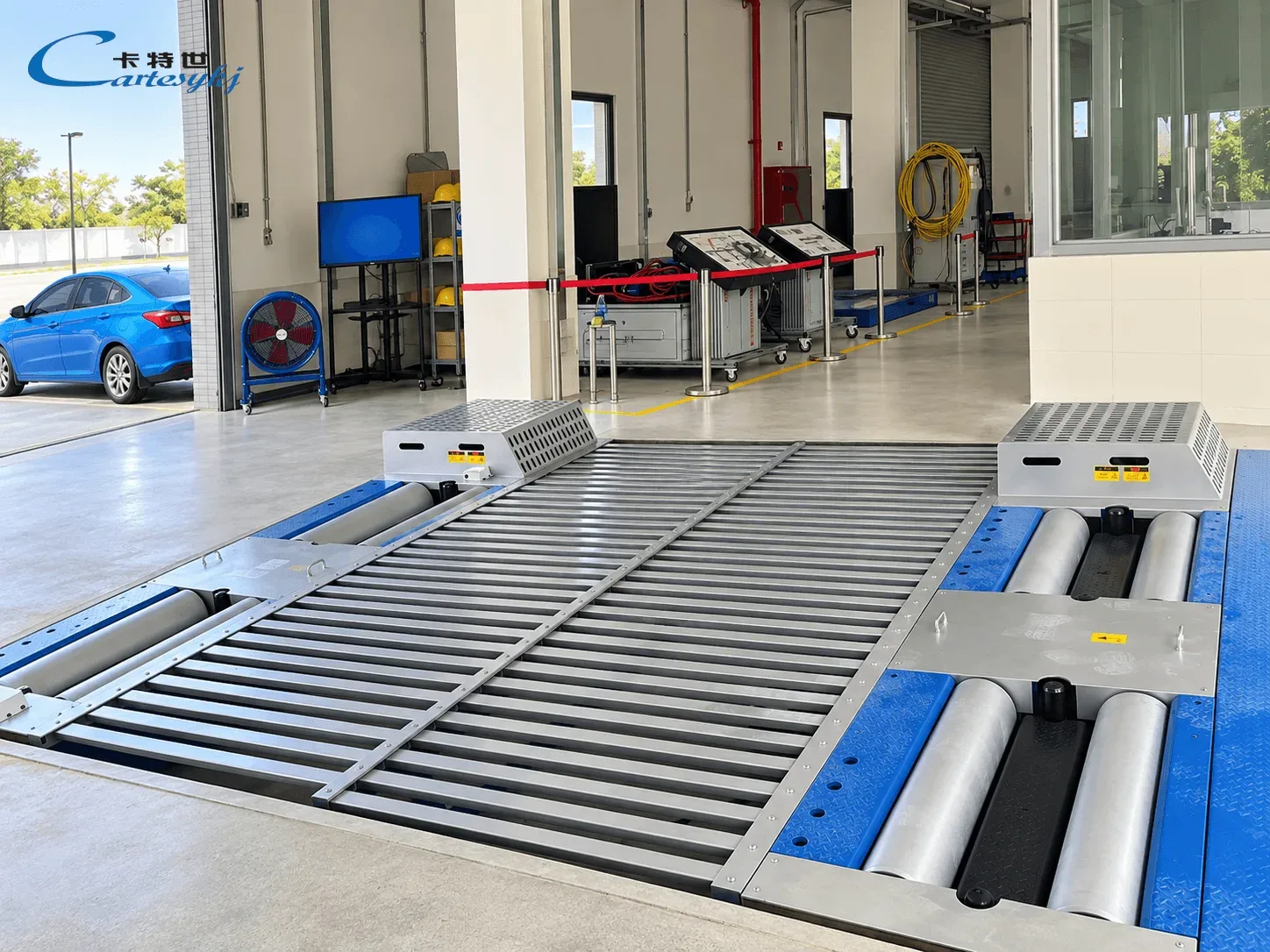
Chassis Dynamometer & Power Performance Testing Equipment
2WD/4WD Chassis Dynamometer | CTDCG -3J/CTDCG-3-4WD
View Product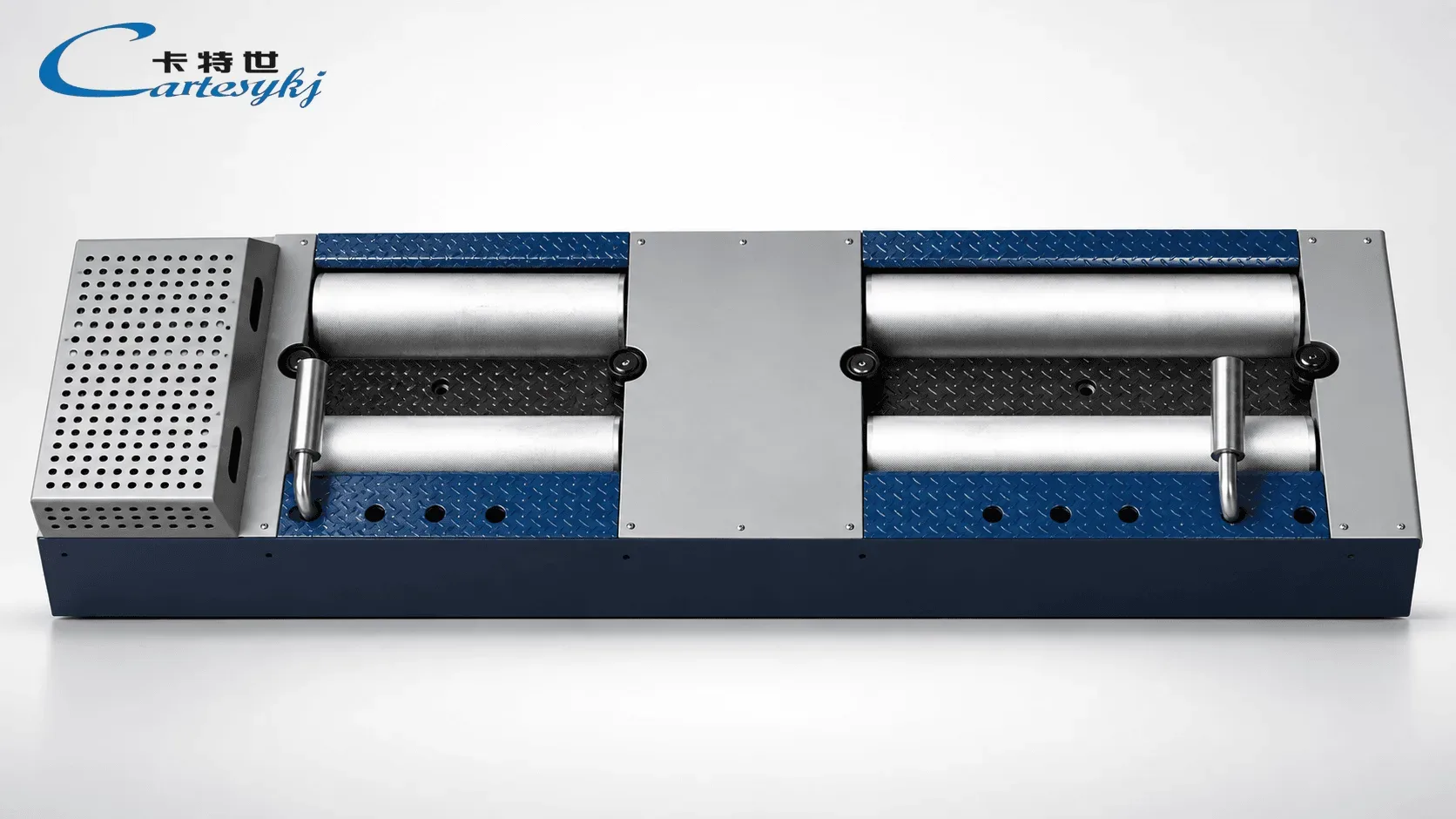
Chassis Dynamometer & Power Performance Testing Equipment
Vehicle chassis dynamometer | CTDCG-3/CTDCG-10/CTDCG-13/CTDCG-15
View ProductRequest a Quote
Request configuration and pricing for your project.
Share your vehicle type, inspection lane layout, target capacity, and required model configuration for Motorcycle single-roller/double-roller horsepower dynamometer | CTMTDCG-3W/CTMTDCG-10W.
Share the project location, vehicle types, inspection scope, applicable standards, target throughput, site conditions and current stage. We will confirm the configuration scope before discussing pricing.