
Brake & Axle Load Testing Equipment
Motorcycle Brake Tester | CTJZMT-300B/CTMT-750 / CT3JZMT-750
In commercial testing lanes and vehicle technical inspection centers, brake testing discrepancies create substantial liability, vehicle downtime, and compliance penalties. Sourcing an industrial-grade Motorcycle Brake T...


In commercial testing lanes and vehicle technical inspection centers, brake testing discrepancies create substantial liability, vehicle downtime, and compliance penalties. Sourcing an industrial-grade Motorcycle Brake Tester ensures accurate verification of dynamic deceleration, axle mass, and mechanical wheel tracking under standardized conditions. Operational teams require robust vehicle testing equipment that combines high structural stiffness, verified roller adhesion, and reliable data acquisition across demanding inspection schedules.
Table of Contents
- Verified Equipment Definition and Material/Application Scope of the Motorcycle Brake Tester
- Buyer Value and Sourcing Considerations Supported by Supplied Facts
- Verified Technology Trends and System Classifications for Brake Test Bench Units
- Documented Materials, Quality Controls, Certifications, and Subcomponents
- Practical Sourcing and Risk-Mitigation Guidance for Procurement
- Frequently Asked Questions
- Conclusion and Technical Consultation
1. Verified Equipment Definition and Material/Application Scope of the Motorcycle Brake Tester
The Cartesykj Motorcycle Brake Tester system is engineered as an integrated, multi-functional safety testing apparatus designed for two- and three-wheel motor vehicles and electric two- or three-wheelers (EVs). Rather than functioning solely as an isolated brake force meter, the complete combined diagnostic line incorporates an axle load (weighting) tester, a dynamic Brake Test Bench, a speedometer testing station, a precision wheel alignment tester, and dual pneumatic centering clamps. This cohesive assembly diagnoses braking capacity, axle load distribution, speedometer display error, and the centerline deviation between front and rear wheels.
Application versatility is central to this diagnostic platform. Operating facilities deploy this motorcycle testing equipment across statutory Motorcycle Safety Technical Inspection Centers and commercial maintenance, diagnostic, and fleet repair workshops. The physical mechanical configuration accommodates standard two-wheel motorcycles, positive three-wheel motorcycles, offset three-wheelers (sidecars), and electric models. Mechanically, the bench accepts vehicles featuring wheelbases ranging between 900 mm and 1700 mm, with transverse wheel distances spanning 500 mm (inner width) up to 1500 mm (outer width).
For facilities seeking a turnkey vehicle testing equipment installation, the baseline testing bench is engineered for modular expansion. Operating systems can interface externally with complementary diagnostic hardware, including exhaust gas emission testers, optical headlight aimers, acoustic sound level meters, and overhead LED signal display boards. This unified architecture enables multi-stage inspection lanes to conduct comprehensive roadworthiness evaluations quickly and systematically.
2. Buyer Value and Sourcing Considerations Supported by Supplied Facts
When selecting a Motorcycle Brake Tester, procurement officers and operations directors must evaluate structural durability, civil installation expenses, and throughput capabilities. Sourcing the Cartesykj CTMT-750 or CT3JZMT-750 series resolves critical operational bottlenecks through simultaneous multi-station detection. Because the unit distributes axle weighing, dynamic brake force analysis, and speedometer calibration across synchronized structural positions, vehicle processing throughput increases significantly compared to single-station standalone machines.
Structural rigidity is achieved through a heavy-duty, whole bending welding structure. This engineered plate design delivers elevated mechanical strength under dynamic vehicle impact and completely eliminates the need for embedded foundation anchor bolts. As a result, commercial facilities avoid deep excavation work, simplifying initial mechanical leveling, commissioning, and potential workshop relocations. Furthermore, an integrated pneumatic lifting platform facilitates smooth vehicle entry and egress across the roller assemblies, protecting motorcycle tires and undercarriage assemblies while maximizing testing safety.
Operational Technical Parameter
Cartesykj CTMT-750 Specification
Cartesykj CT3JZMT-750 Specification
Maximum Permissible Axle Load
1000 kg
1000 kg
Applicable Vehicle Axle Distance (Wheelbase)
900–1700 mm
900–1700 mm
Applicable Wheel Distance (Track Width)
500 mm (inner) / 1500 mm (outer)
500 mm (inner) / 1500 mm (outer)
Brake Roller Geometry (Diameter × Length)
2-∮180×300 mm / 2-∮180×1000 mm
2-∮180×300 mm / 2-∮180×1000 mm
Brake Rollers Center Axle Distance
310 mm
310 mm
Braking Force Measurement Range
0–2500 N
0–2500 N
Braking Force Indication Error
±3%
±3%
Roller Adhesive Friction Coefficient
0.85 (Dry) / 0.6 (Wet)
0.85 (Dry) / 0.6 (Wet)
Brake Drive Motor Configuration
1.5 kW × 2
1.5 kW × 2
Speedometer Roller Geometry
2-∮176.6×300 mm / 2-∮176.6×1000 mm
2-∮176.6×300 mm / 2-∮176.6×1000 mm
Speedometer Rollers Center Axle Distance
310 mm
310 mm
Speedometer Diagnostic Speed Range
0–120 km/h
0–120 km/h
Speedometer Indication Error
±2%
±2%
Speedometer Drive Motor Power
2.2 kW
2.2 kW
Speedometer Bed Lift Method
Pneumatic Actuation
Pneumatic Actuation
Axle Load (Weighting) Measurement Range
0–750 kg
0–750 kg
Axle Load Repetition Error
±2%
±2%
Axle Load Weighing Accuracy
System Error ±2% Full Scale (FS)
System Error ±2% Full Scale (FS)
Wheel Alignment Measurement Range
±15 mm (Indication error: ±0.2 mm)
Optional Configuration
Pneumatic Clamping Mechanism Span
50–230 mm
50–230 mm
Required Pneumatic Operating Pressure
0.6–0.8 MPa
0.6–0.8 MPa
3. Verified Technology Trends and System Classifications for Brake Test Bench Units
Modern vehicle diagnostic systems require precise electromechanical coordination to deliver repeatable results. In the Cartesykj combined Motorcycle Brake Tester, roller dynamic stability is achieved through aviation dynamic balancing technology. Driven by an integrated AC frequency converter, the roller drives accelerate and decelerate rapidly during test cycles, minimizing operational cycle duration while maintaining exceptionally low operating noise levels. Furthermore, test bench operators can manage test point velocities using a dedicated wireless remote control across a wide diagnostic velocity envelope of 0 to 120 km/h.
Securing light two-wheelers and three-wheelers during high-torque brake engagement requires dependable mechanical restraint. The Cartesykj platform integrates two automatic pneumatic wheel clamping mechanisms that clamp tires spanning 50 mm to 230 mm in rim width. Powered by a compressed air supply of 0.6 to 0.8 MPa, these pneumatic centering clamps securely position the vehicle along the testing centerline. A built-in double safety mechanism prevents pneumatic lifting mis-operation during live tests, protecting field operators and test vehicles.
Station Module
Drive / Actuation Type
Testing / Clamping Range
Tolerance and Precision Benchmark
Braking Force Unit
1.5 kW × 2 Electric Motors
0–2500 N Dynamic Force
±3% Indication Error
Axle Weighing Unit
Strain-Gauge Load Cells
0–750 kg Static Mass
±2% Repetitive Error; ±2% FS System Error
Speedometer Bench
2.2 kW Electric Motor
0–120 km/h Velocity
±2% Indication Error
Wheel Alignment Station
Displacement Sensor
±15 mm Centerline Deviation
±0.2 mm Indication Error
Clamping Assemblies
Pneumatic Air (0.6–0.8 MPa)
50–230 mm Tire Width
Pneumatic Centering Actuation
To evaluate chassis tracking and straight-line geometry, the optional alignment subsystem on the Motorcycle Brake Tester utilizes high-precision displacement sensors. This assembly measures the centerline deviation between the front and rear wheels across a range of ±15 mm with an indication error of just ±0.2 mm. High roller roundness combined with sensitive load sensors guarantees measurement exactitude during rapid diagnostic cycles.
4. Documented Materials, Quality Controls, Certifications, and Subcomponents
Longevity in high-moisture, high-abrasion workshop environments depends directly on material selection and surface preparation. The Cartesykj Motorcycle Brake Tester employs a rigid bending-welded steel body coated with high-adhesion protective industrial paint to prevent corrosion from water runoff and road grit. The knurled surface treatment applied to the test rollers provides durable traction, maintaining an adhesive coefficient greater than 0.85 under dry conditions and remaining above 0.6 under wet operating conditions. This slip resistance protects tires while preventing reading distortions during peak deceleration.
Key subcomponents are sourced from established manufacturers with ISO 9001 quality management certifications. The high-efficiency gear reducers, drive motors, precision displacement transducers, load cells, and bearings are engineered for extended operational cycles under continuous vehicle throughput. Strict manufacturing controls govern every stage of production, and the overall system is fabricated in strict accordance with the GB/T 13563 equipment manufacturing standard.
For institutional vehicle safety inspection lanes, measurement reliability and regulatory compliance are essential. The Cartesykj Motorcycle Brake Tester data output, calibration scales, and pass/fail evaluation routines strictly comply with the GB 7258 statutory standard for motor vehicle operation safety technical conditions. Sourcing compliant machinery ensures inspection facilities can defend their safety certification results during regulatory oversight audits.
5. Practical Sourcing and Risk-Mitigation Guidance for Procurement
Procuring capital equipment from a certified Vehicle Inspection Equipment Supplier involves thorough infrastructure planning. Prior to the arrival of the Motorcycle Brake Tester, facilities must prepare a clean compressed air supply line delivering 0.6 to 0.8 MPa to operate the pneumatic lifting plates and tire clamps. Because the entire chassis utilizes an anchor-free bending-welded structural base, floor slab preparation requires only an even, level concrete foundation capable of supporting the rated 1000 kg axle load.
Maintaining system accuracy over long duty cycles requires regular calibration protocols. The axle weighing unit (0–750 kg capacity) features a straightforward mechanical design that facilitates rapid periodic zero-point and full-scale calibration, maintaining repeatability within ±2%. Technicians should schedule routine verification of the dynamic brake load cells (0–2500 N span) using standard test weights to keep indication drift within the verified ±3% limit. Preventive maintenance routines should prioritize pneumatic filter drainage, roller knurling inspections, and motor drive belt or reducer lubrication.
Frequently Asked Questions
What vehicle types can be inspected on this Motorcycle Brake Tester?
The Cartesykj combined diagnostic system inspects two-wheel motorcycles, electric two-wheelers (EVs), positive three-wheel motorcycles, and offset three-wheelers (sidecars). It accommodates vehicle wheelbases between 900 mm and 1700 mm and track widths spanning 500 mm (inner width) to 1500 mm (outer width).
How does the equipment measure motorcycle wheel alignment?
The optional wheel alignment module on the Motorcycle Brake Tester uses a high-precision displacement sensor to quantify front and rear wheel centerline deviation. It measures misalignment within a range of ±15 mm with an indication error of no more than ±0.2 mm.
What pneumatic utility parameters are required for operation?
The system requires a stable, dry pneumatic air supply operating at 0.6 to 0.8 MPa. This pneumatic feed powers the automatic centering wheel clamps (handling tire widths from 50 mm to 230 mm) and drives the vehicle lifting mechanism, which includes a double safety lock to prevent accidental descent.
Which standards govern the manufacturing and safety evaluation of this tester?
The machine is manufactured strictly according to the GB/T 13563 industrial manufacturing standard. The diagnostic judgment parameters, inspection tolerances, and braking criteria comply with the GB 7258 national safety technical standard for motor vehicles.
Conclusion and Technical Consultation
Selecting an industrial Motorcycle Brake Tester requires balancing structural rigidity, high-precision measurement transducers, and multi-vehicle versatility. The Cartesykj CTMT-750 and CT3JZMT-750 combined test benches provide an anchor-free bending-welded frame, pneumatic vehicle clamping, aviation-balanced knurled rollers, and strict compliance with GB/T 13563 and GB 7258 standards. Contact our engineering team to review site layout drawings, request modular equipment options, and receive tailored technical specifications for your motorcycle testing facility.
Related Products
Compare related inspection systems
Brake & Axle Load Testing Equipment
Luxurious Flat Plate Brake Tester | 2CTHPB-3-4/4CTHPB-3B
View Product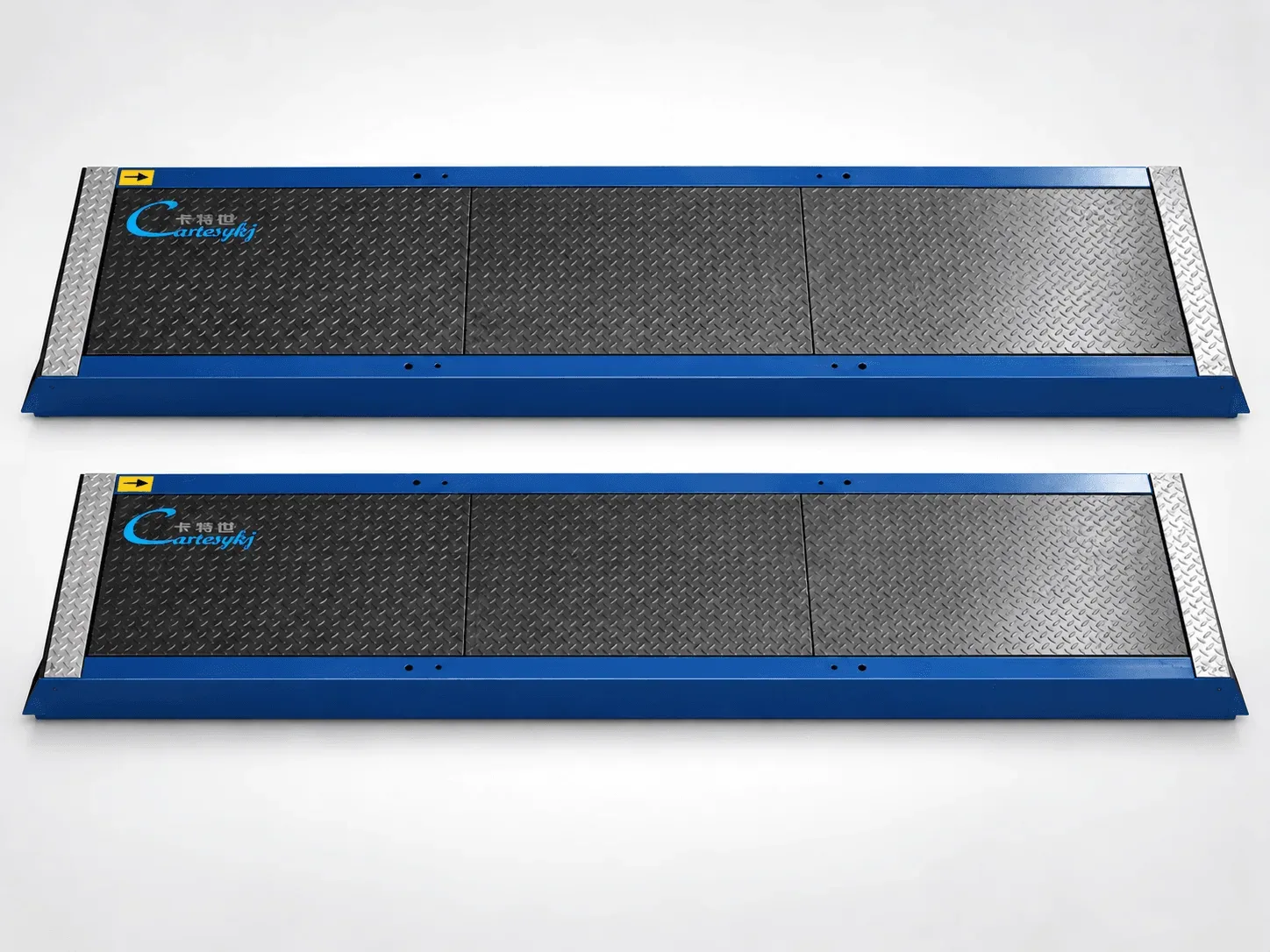
Request a Quote
Request configuration and pricing for your project.
Share your vehicle type, inspection lane layout, target capacity, and required model configuration for Motorcycle Brake Tester | CTJZMT-300B/CTMT-750 / CT3JZMT-750.
Share the project location, vehicle types, inspection scope, applicable standards, target throughput, site conditions and current stage. We will confirm the configuration scope before discussing pricing.